Backyard Privacy Ideas for Corner Lots
Table of Contents
- Why Corner Lots Present Unique Privacy Challenges
- Privacy Fence Height Regulations and Local Zoning Restrictions
- Best Trees for Backyard Privacy
- Hardscape Privacy Screens and Structural Solutions
- Softscaping Strategies: Ornamental Grasses and Layered Planting
- Garden Art and Focal Points to Define Your Outdoor Retreat
- Maintenance and Seasonal Effectiveness of Privacy Solutions
- Creating Your Corner Lot Privacy Plan
- Frequently Asked Questions
Last Updated: September 26, 2026
Why Corner Lots Present Unique Privacy Challenges
Corner lots offer distinct advantages for curb appeal and natural light, but they come with a significant trade-off: exposure on two or more sides. Unlike interior lots where privacy naturally flows from neighboring properties, corner properties face direct sightlines from both the street and adjacent roads. This dual exposure means your backyard privacy ideas for corner lots require a different strategic approach than standard residential designs.
The challenge intensifies when you consider sight triangles, the clear zones municipalities require at street corners for traffic safety. These regulations limit fence height and placement in critical areas, forcing homeowners to get creative with layered privacy solutions. At CH&L Landscaping & Concrete, the most successful corner lot transformations combine hardscape structures with strategic softscaping to create visual barriers without fighting local codes.
The psychological impact matters too. Knowing you're visible from multiple angles changes how you use your outdoor space. Families hesitate to relax fully, entertaining feels exposed, and the sense of retreat, what outdoor living should provide, gets compromised. The right backyard privacy ideas for corner lots don't just block sightlines; they create genuine sanctuary.
Privacy Fence Height Regulations and Local Zoning Restrictions
Fence height regulations vary significantly by jurisdiction, and corner lots face stricter rules than interior properties. Most municipalities cap residential fences at 4-6 feet in required sight triangles, the zones extending from corner properties into the street intersection. Beyond those triangles, you may be able to go taller, often to 6-8 feet, but the transition creates design challenges.
Check your local municipal code and HOA restrictions before designing any privacy fence. Many areas require setback distances from property lines, limit materials (vinyl vs. wood vs. composite), and specify maintenance standards. Some jurisdictions prohibit certain materials entirely or require fence designs that allow visibility through slats or gaps. Violating these codes results in removal orders and fines, expensive mistakes that could have been prevented with a single phone call to your planning department.
The sight triangle itself deserves special attention. These are typically 25-50 feet from the corner intersection, and they're measured from the street edge, not your property line. This means your fence might need to step down in height as it approaches the corner, creating an asymmetrical design challenge. This is where professional landscape design becomes invaluable.
Best Trees for Backyard Privacy
Trees provide the most elegant privacy solution for corner lots because they work with natural aesthetics rather than against them. Evergreen shrubs and trees maintain year-round coverage, while deciduous trees offer seasonal flexibility, full privacy in summer, partial visibility in winter when you might want sunlight.
For corner lot privacy, consider these evergreen options that mature to appropriate heights:
- Emerald Green Arborvitae: Narrow columnar form, 40-60 feet tall at maturity, dense foliage, tolerates various soil conditions
- Leyland Cypress: Fast-growing, 60-70 feet tall, feathery texture, excellent for creating tall screens quickly
- Italian Cypress: Narrow, formal appearance, 30-40 feet tall, works well in Mediterranean or contemporary designs
- Canadian Hemlock: Graceful, 40-70 feet tall, prefers partial shade, creates natural privacy buffer
- Thuja (Western Red Cedar): Dense foliage, 40-60 feet tall, aromatic, naturally pest-resistant
The key to using trees for backyard privacy ideas for corner lots is layering. A single row of trees rarely achieves complete privacy, you'll see gaps between trunks and branches at eye level. Instead, plant in staggered rows with 8-12 feet between trees, and combine with understory shrubs (4-6 feet tall) to fill lower gaps. This creates a natural, graduated privacy screen that looks intentional rather than defensive.
Mature trees also increase property value and provide environmental benefits beyond privacy. They reduce noise, improve air quality, and create shade that lowers cooling costs. The investment pays dividends across multiple dimensions of home value.
Hardscape Privacy Screens and Structural Solutions
Hardscape solutions offer immediate privacy without the 3-5 year wait for trees to mature. These structural elements also provide design flexibility and architectural interest that softscaping alone can't achieve. For corner lots, hardscape privacy screens often work best as complementary layers rather than standalone solutions.
Wood Slat Partitions and Freestanding Screens
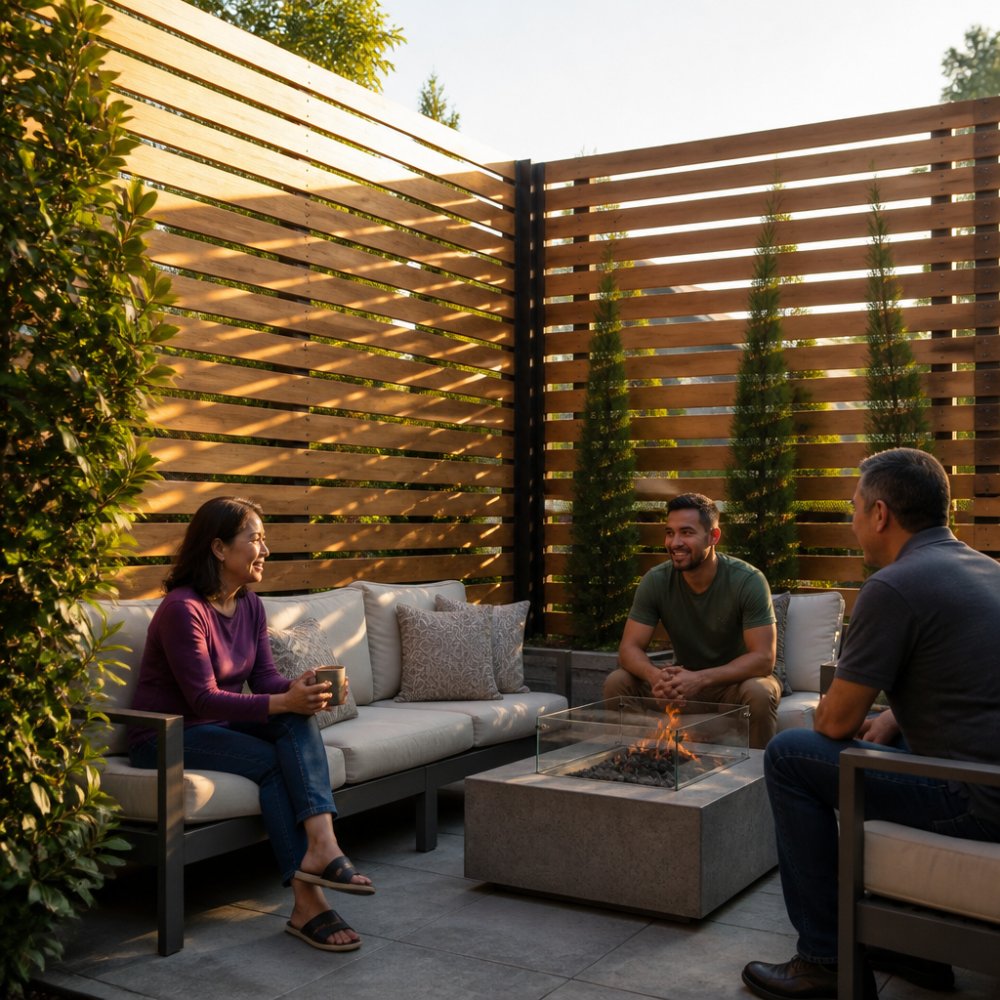
Horizontal and vertical wood slat screens have become the go-to choice for modern privacy design. Unlike traditional solid fences, slat partitions create visual interest through shadow and light while maintaining some airflow and sight-line variation. They work particularly well on corner lots because you can orient them strategically, solid where you need maximum privacy, more open where you want to preserve views or reduce the "fortress" feeling.
Freestanding screens offer flexibility that attached fences don't provide. You can position them independently of property lines, creating privacy zones within your yard rather than just at the perimeter. This matters on corner lots where you might want to shield one seating area while leaving another more open.
Material selection affects both aesthetics and maintenance. Pressure-treated lumber costs less but requires regular staining or sealing. Composite materials and tropical hardwoods resist weathering better but cost significantly more. Cedar and redwood offer a middle ground, naturally rot-resistant, attractive appearance, moderate maintenance requirements.
Pergolas and Partially Enclosed Structures
Pergolas serve a different function than solid privacy screens, they create partial enclosure while maintaining openness. A pergola with climbing vines offers the best of both worlds: overhead coverage that blocks aerial sightlines, open sides that feel less claustrophobic than a full enclosure, and the aesthetic appeal of established vines.
For corner lots, pergolas work best when positioned to frame specific views while blocking others. A strategically placed pergola can shield your seating area from street view while maintaining sight lines toward attractive landscape features within your property. This directional approach prevents the "boxed in" feeling that full enclosures sometimes create.
Partially enclosed structures, pergolas with one or two solid walls, shade structures with strategic slat placement, offer more privacy than open pergolas while preserving the sense of connection to your outdoor space. These hybrid structures often represent the sweet spot for corner lot design: sufficient privacy for comfortable use, enough openness to feel integrated with your landscape.
Softscaping Strategies: Ornamental Grasses and Layered Planting
Ornamental grasses provide texture, movement, and privacy without the visual weight of solid shrubs or trees. Tall ornamental grasses (4-6 feet) create effective privacy screens when planted densely, and they offer the added benefit of seasonal interest, changing color and texture through fall and winter.
Layered planting creates depth and visual interest while maximizing privacy.
Garden Art and Focal Points to Define Your Outdoor Retreat
Privacy isn't only about blocking sightlines, it's about creating a sense of place and purpose. Garden art and focal points draw attention inward, making your outdoor retreat feel intentional and designed rather than simply screened off.
Consider these focal point options:
- Water features: Fountains, small ponds, or streams create sound barriers and visual interest
- Sculpture and garden art: Positioned to frame views and create gathering points
- Architectural elements: Pergolas, pavilions, or shade structures that serve dual purposes
- Landscape lighting: Strategic uplighting or path lighting creates evening privacy and ambiance
- Raised beds and terraced gardens: Define spaces and create subtle barriers while adding visual interest
Maintenance and Seasonal Effectiveness of Privacy Solutions
Different privacy solutions require different maintenance approaches, and corner lots, exposed to more sun and wind, demand more attention than sheltered interior properties. Understanding maintenance requirements upfront prevents surprises and ensures your privacy investment delivers year-round value.
Creating Your Corner Lot Privacy Plan
Developing an effective backyard privacy plan for corner lots requires systematic thinking about regulations, sight lines, design preferences, and maintenance capacity. Start by documenting your specific situation: measure sight triangles, identify sightlines from different angles, note sun exposure and wind patterns, and verify local regulations.
Frequently Asked Questions
How do I know what privacy fence height is allowed on my corner lot?
Fence height regulations vary by local jurisdiction and HOA rules. Most municipalities allow 6 feet in backyards but restrict corner lot fences to 3-4 feet within sight triangles to maintain road visibility and safety. Check your local zoning code or contact your city planning department before building. HOAs often have stricter requirements, so review your CC&Rs. A professional landscape designer familiar with local regulations can guide you through compliance.
What are the best trees for backyard privacy on a corner lot?
Evergreen shrubs and trees provide year-round screening. Leyland cypress, green giant arborvitae, and Italian cypress grow tall and dense while maintaining narrow profiles ideal for corner lots. For a softer look, consider native species like coast live oak or California bay laurel. Plant in staggered rows to create a mature buffer zone. Evergreens require minimal pruning once established, making them a low-maintenance privacy solution that adds curb appeal and visual interest.
Are hardscape privacy screens worth the investment compared to fences or plants?
Hardscape screens offer distinct advantages: they require less maintenance than living plants, provide immediate privacy (unlike trees that take years to mature), and create architectural focal points that enhance outdoor living spaces. Wood slat partitions and pergolas blend softscaping with hardscaping, offering flexibility in design. While initial costs differ based on materials and complexity, hardscape solutions typically outlast standard fencing and add significant property value when designed as part of a comprehensive landscape architecture plan.
How do I maintain privacy solutions through different seasons?
Evergreen plants maintain screening year-round, but deciduous trees lose foliage in winter. Combine evergreen shrubs with hardscape elements like pergolas or wood screens for consistent privacy. Ornamental grasses provide seasonal visual interest and texture. Inspect hardscape structures annually for weathering and apply protective finishes as needed. Plan layered planting with multiple plant heights to ensure dense coverage. Discuss seasonal maintenance with your landscape designer to create a solution that keeps your outdoor retreat private and functional throughout the year.
Ready to start your project?
CH&L Landscaping & Concrete serves Concord, Martinez, and the greater Bay Area. Get a free, no-obligation estimate today.
Get a Free Estimate