Benefits of Professional Landscape Design in 2026
Table of Contents
- The Real Value of Professional Landscape Design
- Landscape Design ROI: How Professional Planning Pays Off
- Water-Efficient Landscaping Techniques That Cut Costs
- How to Increase Backyard Privacy with a Master Plan
- Design-Build vs. Design-Only: Which Process is Right?
- Navigating Site Analysis, Zoning, and Drainage Solutions
- Integrating Smart Technology and Climate-Specific Strategies
- Conclusion: Your First Step Toward a Curated Landscape
- Frequently Asked Questions
Last Updated: September 9, 2026
The Real Value of Professional Landscape Design
A thoughtfully planned yard does more than look attractive; it changes how you live on your property. Professional landscape design is the process of translating your outdoor space into a cohesive plan that balances aesthetics, function, and long-term value before any ground is broken. At CH&L Landscaping & Concrete, we've spent over 15 years watching homeowners discover that the quality of the plan determines the quality of the result.
Most people assume a beautiful yard is about expensive materials or rare plants. In practice, the opposite is true. The real differentiator is spatial planning: knowing where the sun hits at 4 p.m., how water moves across your lot, and which sightlines matter from your kitchen window. A professional landscape designer studies these details through a proper site analysis, then builds a master plan around them.
Below, we'll show you exactly how professional planning pays off, from resale value to water bills, and where the process often goes sideways for homeowners who try to wing it.
Landscape Design ROI: How Professional Planning Pays Off
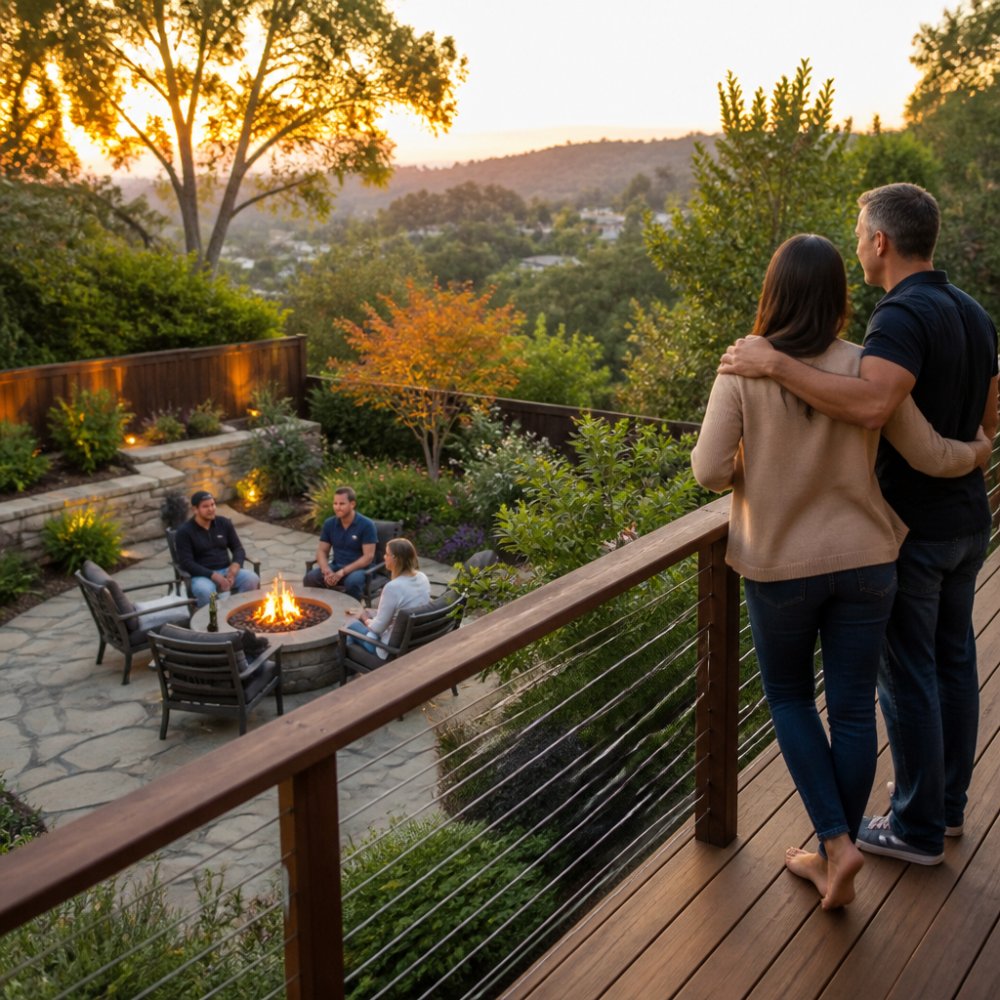
Landscape design ROI is the return you earn on your landscaping investment, measured both in resale value and in the daily usability of your property. Unlike interior renovations that date quickly, a well-executed outdoor plan keeps delivering for decades, which is why real estate professionals consistently rank curb appeal among the most influential factors in a home's perceived value.
The Financial Mechanics of Landscape ROI
The most frequently cited industry benchmark comes from the American Society of Landscape Architects (ASLA), which has long noted that professional landscape design can yield a return on investment between 100% and 200% at resale (asla.org). That figure depends on a critical distinction most homeowners miss: the difference between a master plan and a collection of improvements.
A master plan is a phased roadmap. It allows you to install the patio this year, the planting beds next year, and the outdoor kitchen in year three, all while ensuring each phase looks complete on its own and connects logically to the next. This approach prevents piecemeal projects that clash in style or scale, and lets you stage investment against your budget.
The second financial mechanism is cost avoidance. A site analysis that reveals poor drainage can save you from installing a $15,000 patio that pools water and needs to be ripped out within two years. Similarly, specifying the correct hardscape base material, crushed stone versus sand, can prevent pavers from settling unevenly.
Curb Appeal and Resale Value: Beyond the Front Yard
The financial case for professional landscape design is straightforward. A cohesive front yard with defined planting beds, mature focal points, and clean hardscape edges signals to buyers that the home has been maintained. That first impression shapes every offer that follows. When you sell, the landscape is the first thing a buyer sees and the last thing they remember.
Resale value isn't just about the front yard. A functional backyard that extends your living space, with a patio for dining and pathways that connect zones, adds usable square footage without the cost of a building addition. Appraisers often categorize a well-designed outdoor living area as 'improved living space,' which can appraise at a higher per-square-foot value. The key is aesthetic cohesion: every element should feel intentional.
The 'Staging' Effect of Professional Design
There is also a less-discussed psychological component. When a landscape looks professionally designed, buyers subconsciously assume the home's mechanical systems, roof, HVAC, plumbing, have also been maintained. This 'halo effect' can shorten time-on-market and reduce low-ball offers. Most real estate professionals will tell you that a home with a curated landscape sells faster than an identical home with a neglected one.
The Long Game: Maintenance Cost as ROI
Finally, ROI is not only about the sale price. It is also about what you don't spend while you live there. A professional plan groups plants by water needs, specifies native species that resist local pests, and designs hardscape that requires minimal upkeep. Over a ten-year horizon, these choices can save thousands in water bills, replacement plantings, and pressure-washing services.
Water-Efficient Landscaping Techniques That Cut Costs
Water-efficient landscaping techniques reduce outdoor water use by pairing drought-tolerant native plants with smart irrigation design. For regions prone to dry summers, this is where professional planning earns its keep. A landscape designer selects plantings suited to your local climate and soil health, grouping them by water needs so nothing gets overwatered.
The biggest savings come from irrigation efficiency. Drip lines deliver water to roots instead of spraying it into the air, and smart controllers adjust schedules based on rainfall (the EPA). A common mistake is installing a beautiful lawn and hoping for the best; in practice, lawns consume more water than almost any other landscape element. Replacing thirsty turf with native ground covers and mulch beds cuts maintenance dramatically.
How to Increase Backyard Privacy with a Master Plan
How to increase backyard privacy starts with a master plan that treats screening as a design element, not an afterthought. The goal is to block sightlines from neighbors while preserving light and views you actually want. Layering is the insider secret: a combination of evergreen shrubs, ornamental grasses, and a pergola or shade structure creates depth so the space feels enclosed without feeling like a box.
Fencing alone rarely solves the problem. Solid walls can make a small yard feel smaller and block the afternoon breeze. Professional designers instead use vertical elements at varying heights, positioning them based on where you sit, dine, and entertain. This approach also supports ecosystem preservation by leaving room for pollinators and birds.
Design-Build vs. Design-Only: Which Process is Right?
Choosing between a design-build firm and a design-only professional is one of the most consequential decisions in a luxury landscape remodeling project. The distinction is not merely contractual; it fundamentally changes how risk, cost, and creative control are distributed across your project.
Understanding the Two Models
The design-build process keeps planning and construction under one contract. A single firm employs both the landscape designers who create the plan and the construction crews who execute it. The designer works alongside the build team from the first site visit, so the plan is continuously checked against real-world construction realities like soil conditions, access constraints, and material lead times.
The design-only model (sometimes called design-bid-build) separates the two. You hire a landscape architect or designer to produce a detailed plan and construction documents. That plan is then put out to bid, and you separately contract with a landscape contractor to build it. This model is common for high-end residential work where a signature design is the priority, but it places the project management burden on the homeowner.
The Risk Profile: Where Projects Go Wrong
The most significant risk in the design-only model is the 'value engineering' gap. A designer who does not build may specify materials or details that are disproportionately expensive to construct. When bids come in over budget, the homeowner must pay the premium or ask the contractor to substitute materials, a process that often erodes the designer's original intent.
In the design-build model, this risk is internalized. Because the same team is responsible for both the drawing and the build, the design is developed with a realistic construction budget from the outset. The team knows what a particular stone costs to source and install, and they specify accordingly. This is why design-build projects typically experience fewer change orders and fewer budget overruns.
Cost Structure and Accountability
In a design-only engagement, you pay for the design as a standalone professional service, typically a flat rate or hourly charge separate from the construction bid. If bids come in higher than expected, you have already paid for the design and must either fund the gap or pay for redesign.
In a design-build engagement, the design fee is often rolled into the overall project cost or credited toward the construction contract. More importantly, accountability is unified. If a retaining wall fails or a drainage detail does not perform, there is no ambiguity about who is responsible, the firm that designed it built it, and they own the warranty.
When Design-Only Makes Sense
Design-only is not inherently inferior. It is the right choice when you have an existing relationship with a landscape architect whose aesthetic you trust implicitly, and when your project warrants a highly specialized design that a generalist design-build firm might not offer. It also makes sense for very large estates where the design phase may take a year or more and you want to bid construction separately for competitive pricing.
However, for most luxury remodeling projects, where the goal is a cohesive outdoor living space on a predictable timeline, the design-build model offers a structural advantage. The team is incentivized to design for buildability, and you have a single point of contact from first sketch to final walkthrough.
The Hybrid Option
A third path exists: the design-build firm that offers a 'design consultation' or 'preliminary master plan' as a standalone service, with the understanding that you may take that plan elsewhere for construction. You get the strategic thinking of a professional but retain the freedom to bid construction separately. The caveat is that the plan must be detailed enough to be buildable by another contractor, meaning you pay for full construction documents, not just a concept sketch.
The Luxury Remodeling Perspective
In luxury remodeling, the stakes are higher because materials are more expensive and details are more complex. A $200,000 hardscape project has zero tolerance for a design not engineered for the specific grade and drainage of your lot. The design-build model, with its integrated team, is often the only way to guarantee that level of precision.
Navigating Site Analysis, Zoning, and Drainage Solutions
Before a single plant goes in the ground, professional landscape design addresses what's happening beneath the surface. Site analysis examines your topography, soil health, and existing drainage patterns to identify problems early. Drainage solutions, such as French drains or permeable hardscape materials, prevent water from pooling against your foundation or washing out plantings.
Zoning and permit acquisition are the unglamorous parts of landscaping that professionals handle quietly. Many homeowners don't realize that retaining walls, structures, and even certain hardscape installations require permits, and rules vary by municipality (hud.gov). A licensed contractor who knows the local code keeps your project legal and prevents costly stop-work orders. CH&L Landscaping & Concrete brings design, permitting, and construction together under a single contract, which is why our projects stay on time and on budget.
Integrating Smart Technology and Climate-Specific Strategies
Modern landscape design increasingly pairs with smart home technology to reduce maintenance and extend usability. Automated lighting that responds to motion, irrigation controllers that pull local weather data, and low-voltage systems for pathways all make the yard easier to live with. These features are best planned during the design phase, when conduit and wiring can be installed before patios are poured.
Climate-specific design strategies matter more than trends. A yard planned for your local conditions, with the right sun exposure, wind protection, and plant palette, will thrive with far less intervention. This is what low-maintenance actually means: the design does the work, so you don't have to replant every spring or hand-water through summer.
Conclusion: Your First Step Toward a Curated Landscape
The gap between a yard that works and one that fights you comes down to planning. Professional landscape design gives you a roadmap that protects your budget, raises your property value, and creates an outdoor living space your family actually uses.
At CH&L Landscaping & Concrete, our proven four-step process includes custom design with every project, backed by high-quality materials and a licensed, insured team that has delivered for over 15 years. We handle site analysis, permitting, and construction so you get one accountable partner from first sketch to final walkthrough. Get a Free Estimate and see what a curated landscape could look like for your home.
Frequently Asked Questions
What are the primary benefits of professional landscape design?
Professional landscape design creates a cohesive master plan that boosts property value, improves curb appeal, and expands your usable outdoor living space. A designer addresses drainage solutions, soil health, and plant selection from the start. This approach prevents costly mistakes and ensures the final result is functional, sustainable, and tailored to your lifestyle, offering a higher landscape design ROI than unplanned projects.
How does professional design improve water efficiency in a yard?
Professionals apply water-efficient landscaping techniques such as hydrozoning, where plants with similar water needs are grouped together. They design irrigation systems with smart controllers that adjust to weather and soil conditions. Specifying native plants reduces the need for supplemental watering. These strategies lower your water bill and create a more resilient landscape that thrives with minimal intervention.
How does professional landscaping increase home value?
A professionally designed landscape adds significant value by extending your home's living space outdoors and creating strong curb appeal. The landscape design ROI is often higher than other home improvements because buyers are drawn to move-in-ready outdoor areas. Features like patios, outdoor kitchens, and mature plantings signal that the property has been maintained with care, allowing sellers to command a premium price.
What is the difference between landscaping and landscape design?
Landscaping is the physical act of installing and maintaining a yard, such as planting trees and laying sod. Landscape design is the planning phase that involves site analysis, spatial planning, and creating a detailed blueprint. A professional designer considers topography, soil health, and aesthetic cohesion before any work begins. This 'design-first' approach ensures your project budget is spent correctly and the result is both beautiful and functional.
Ready to start your project?
CH&L Landscaping & Concrete serves Concord, Martinez, and the greater Bay Area. Get a free, no-obligation estimate today.
Get a Free Estimate