Best Drought-Tolerant Ground Cover for Slopes
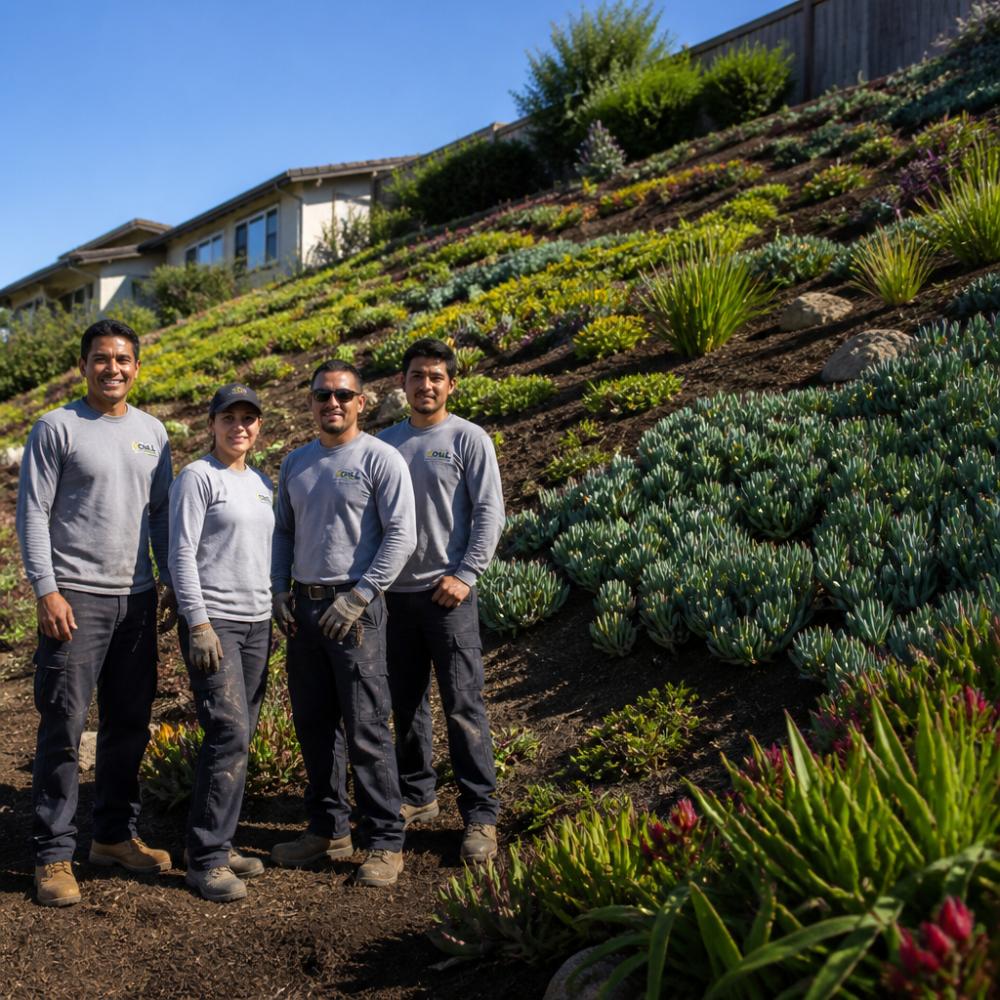
Table of Contents
- Why Drought-Tolerant Ground Cover Matters for Slopes
- Quick Comparison: Top Ground Covers for Slope Stabilization
- 1. Ceanothus griseus horizontalis 'Yankee Point': Fast Coverage and Erosion Control
- 2. Arctostaphylos 'Pacific Mist': Dry Shade Champion
- 3. Baccharis pilularis 'Pigeon Point': Low-Maintenance Erosion Control
- 4. Salvia spathacea and Sedum spathulifolium: Specialized Solutions
- Low-Maintenance Landscaping Ideas for Slope Success
- Choosing the Right Ground Cover for Sun vs. Shade
- Frequently Asked Questions
Last Updated: September 1, 2026
Why Drought-Tolerant Ground Cover Matters for Slopes
Slopes present one of the most challenging landscaping conditions: water runs downhill, soil erodes, and most conventional plants struggle to establish roots in unstable ground. Drought-tolerant ground cover for slopes solves this problem by stabilizing soil, preventing runoff, and thriving on minimal water once established. At CH&L Landscaping & Concrete, we work with Bay Area homeowners to transform steep hillsides into beautiful, functional landscapes that require far less maintenance than traditional turf or shrub borders.
The real advantage isn't just water savings, it's erosion control. Native and adapted plants with deep root systems bind soil particles together, reducing the impact of heavy winter rains that would otherwise carve gullies into bare earth. For homeowners on slopes, this means fewer washouts, less sediment in storm drains, and a landscape that actually improves with age rather than degrading.
Choosing the right ground cover for your specific slope involves understanding three variables: sun exposure (full sun versus dry shade), slope gradient (gentle versus near-vertical), and your desired aesthetic. Some plants excel at rapid coverage for quick erosion control. Others provide year-round visual interest with flowers or architectural foliage. A few do both.
Quick Comparison: Top Ground Covers for Slope Stabilization
| Ground Cover | Best For | Growth Rate | Sun Requirement | Mature Spread | Key Benefit |
|---|---|---|---|---|---|
| Ceanothus griseus 'Yankee Point' | Large slopes, coastal areas | Fast (2-3 years) | Full sun to part shade | 8-12+ feet | Exceptional erosion control, pollinator-friendly |
| Arctostaphylos 'Pacific Mist' | Dry shade slopes | Moderate (3-4 years) | Part to full shade | 6-10 feet | Thrives where most plants fail |
| Baccharis pilularis 'Pigeon Point' | Full-sun banks | Fast (2 years) | Full sun | 8 feet wide, 18" tall | Low-maintenance, minimal pruning |
| Salvia spathacea | Dry shade, under oaks | Moderate | Shade to part sun | Spreads via rhizomes | Year-round hummingbird attraction |
| Sedum spathulifolium | Rocky slopes, coastal cliffs | Slow (establishes quickly) | Full sun to part shade | 1-3 feet | Unique texture, extreme drought tolerance |
1. Ceanothus griseus horizontalis 'Yankee Point': Fast Coverage and Erosion Control
This California native is the workhorse of slope stabilization. 'Yankee Point' spreads aggressively, 8 to 12 feet wide or more, and establishes quickly enough to control erosion within 18 to 24 months. The bright blue flowers arrive in early summer, attracting bees and native butterflies at a time when many other plants are dormant.
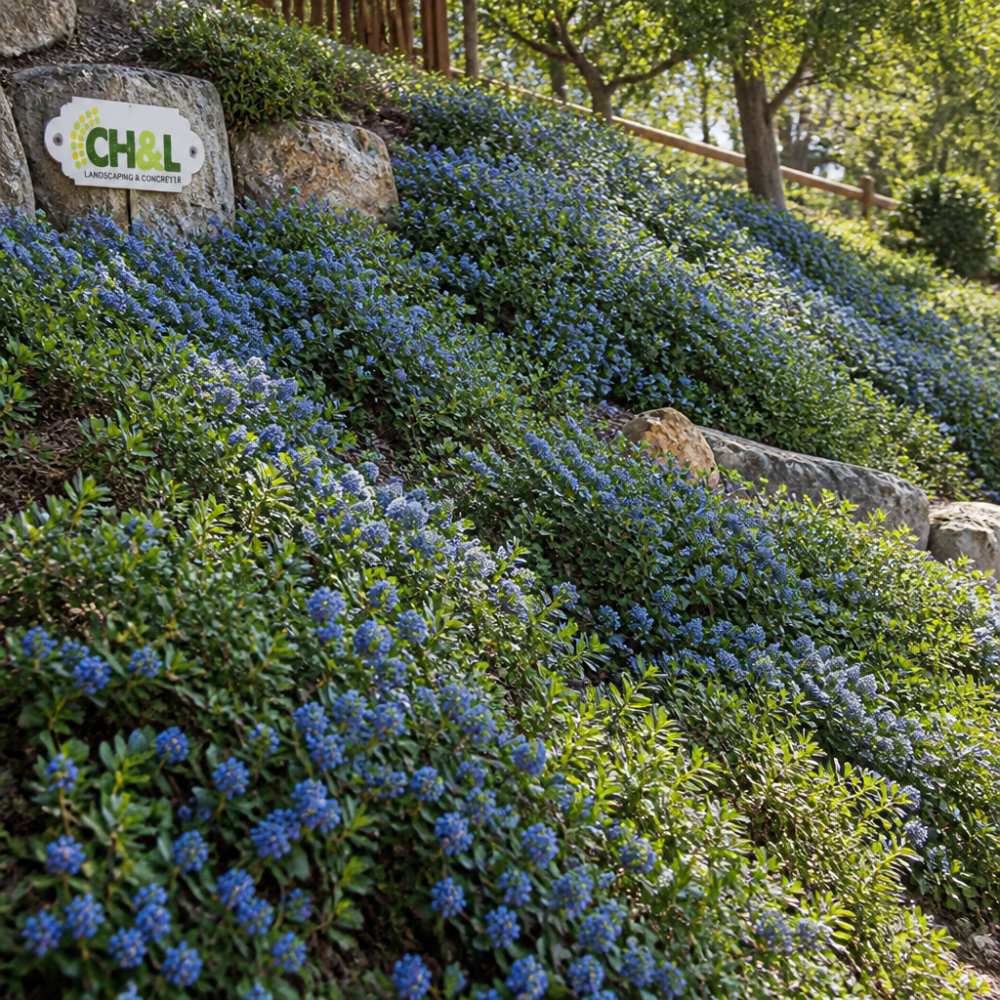
What makes this cultivar exceptional for slopes is its deep root system. Unlike shallow-rooted groundcovers that sit on top of soil, Ceanothus develops a taproot that anchors into compacted earth, binding soil particles and preventing the kind of catastrophic washouts that plague unplanted slopes. Salt tolerance makes it particularly valuable in coastal Bay Area gardens where fog and marine spray stress most plants.
The tradeoff is space. This plant will sprawl across 10 feet or more if left unpruned, so it's best reserved for larger slopes or areas where width isn't a constraint. It also prefers well-draining soil, heavy clay or consistently wet conditions can cause root rot. For slopes with poor drainage, amend with coarse sand or perlite before planting.
2. Arctostaphylos 'Pacific Mist': Dry Shade Champion
If your slope lives under oak trees or faces north with minimal direct sun, Arctostaphylos 'Pacific Mist' is the answer to a problem most groundcovers can't solve. This hybrid manzanita tolerates dry shade, a combination that defeats nearly every other option, while still spreading 6 to 10 feet wide and establishing in 3 to 4 years.
The handsome gray-green foliage provides year-round interest. New growth tips toward reddish tones in cooler months, and the deep reddish-brown bark adds textural contrast even when the plant isn't flowering. Small white, urn-shaped flowers appear in late winter, providing early nectar for hummingbirds before most spring bloomers emerge.
What matters most for slopes: 'Pacific Mist' tolerates a wider range of soil conditions than most manzanitas. It adapts to sandy beach soils, rocky decomposed granite, and even heavier loams, as long as drainage is reasonable. Once established, it requires virtually no supplemental water, even in inland Bay Area heat.
The main limitation is growth rate. Manzanitas establish more slowly than Ceanothus, so don't expect full erosion control coverage until year three or four. For slopes where immediate stabilization is critical, pair 'Pacific Mist' with faster-growing companions like Baccharis, then let the manzanita take over as it matures.
3. Baccharis pilularis 'Pigeon Point': Low-Maintenance Erosion Control
Coyote Brush cultivars are the unsung heroes of Bay Area slopes. 'Pigeon Point' grows lower and denser than its parent species, reaching just 18 inches tall while spreading 6 to 8 feet wide. It establishes faster than manzanita and tolerates a broader range of conditions than Ceanothus, making it an excellent middle-ground choice for slopes where you want reliable coverage without fussiness.
The bright green, rounded foliage provides a softer aesthetic than silver-leafed alternatives. Cream-colored flowers arrive in late summer, providing late-season nectar when bees need it most. The plant isn't showy, but it's dependable, exactly what a slope needs.
Baccharis thrives in full sun and adapts to poor, compacted soils that would challenge other plants. It doesn't require soil amendment and tolerates both drought and occasional overwatering better than most natives. For slopes with heavy foot traffic or areas where you plan to install pathways or structures later, 'Pigeon Point' establishes quickly enough to stabilize soil while remaining flexible enough to work around.
Pruning is minimal. The plant naturally maintains a compact mound without aggressive shearing, though you can cut it back hard in late winter if it gets leggy. Unlike some groundcovers that become woody and sparse with age, Baccharis stays dense and attractive for decades.
4. Salvia spathacea and Sedum spathulifolium: Specialized Solutions
These two plants solve specific slope challenges that broader-spectrum groundcovers can't address alone.
Salvia spathacea (Hummingbird Sage) is the go-to for dry shade slopes, particularly under coast live oaks where nothing else thrives. It spreads by underground rhizomes, colonizing space quickly once established. Bright red bracts on 1- to 3-foot stalks bloom nearly year-round, making it a magnet for hummingbirds and adding color to otherwise dull shade slopes.
The catch: Hummingbird Sage isn't as dense for erosion control as Ceanothus or Baccharis. It's better suited to slopes where you're planting it alongside other groundcovers or where the slope is already partially stabilized. In pure dry shade under mature oaks, it's unbeatable. Elsewhere, combine it with denser neighbors.
Sedum spathulifolium (Yellow Stonecrop) serves a different role entirely. This California native succulent thrives on rocky slopes and coastal cliffs where soil is minimal and drainage is extreme. It grows slowly, don't expect rapid coverage, but once established, it requires virtually no water and handles salt spray, wind, and poor soil that would kill conventional plants.
Plant Sedum in clusters rather than as a complete groundcover. It works best as a textural accent on rocky slopes, mixed with other low-growing natives. The spoon-shaped rosettes and bright yellow flowers add visual interest without the maintenance demands of more fussy plants.
Low-Maintenance Landscaping Ideas for Slope Success
Choosing the right ground cover is half the battle. Installation and establishment determine whether your slope stabilizes or erodes.
Soil Preparation and Mulching
The biggest mistake homeowners make is planting directly into existing slope soil without any preparation. Compacted earth, poor drainage, and lack of organic matter doom even the toughest plants.
For slopes with heavy clay or poor drainage, amend the top 6 to 8 inches with a mix of existing soil, coarse sand, and aged compost. The goal isn't to create perfect planting soil, natives actually prefer lean conditions, but to break up compaction and improve drainage enough for roots to penetrate.
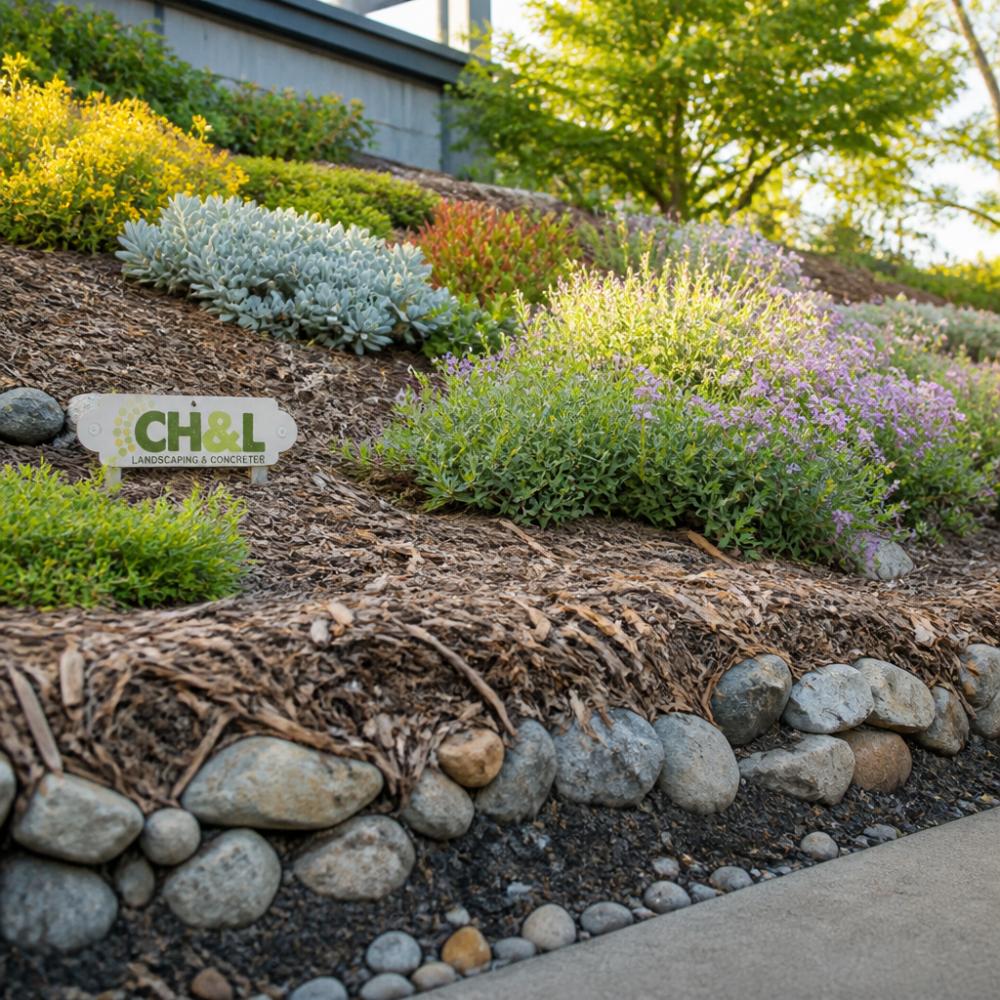
Mulch is essential. Apply 2 to 3 inches of wood chips around plants, keeping it a few inches away from stems to prevent rot (extension.oregonstate.edu). Mulch does three things: it retains moisture during establishment, moderates soil temperature, and suppresses weeds that compete with young plants. On slopes, mulch also slows water runoff, giving rain time to infiltrate rather than cascading downhill.
For slopes steeper than 30 degrees, consider erosion control matting under mulch. Biodegradable jute or coconut fiber netting holds soil and mulch in place during the critical first year while roots are establishing. Once plants are mature and root systems are deep, the matting decomposes and disappears.
Spacing and Establishment
Spacing depends on your timeline and budget. Closer spacing (3 to 4 feet apart) provides faster visual coverage and erosion control but requires more plants and higher upfront cost. Wider spacing (6 to 8 feet apart) reduces plant count and initial expense but means bare soil for 2 to 3 years while plants fill in.
For slopes where erosion is an active problem, closer spacing is worth the investment. For slopes that are stable but aesthetically bare, wider spacing works fine if you're patient.
Water management during establishment is critical. Most slope failures happen in the first year when plants are establishing roots. Water deeply but infrequently, once or twice weekly during the growing season, depending on heat and rainfall (the CDC). The goal is to encourage deep rooting, not surface wetting. Drip irrigation on a timer is ideal; hand-watering leads to inconsistency and often fails when owners travel or forget.
After the first full growing season, reduce watering frequency. By year two, most drought-tolerant plants should need water only during extended dry spells. If you're still watering regularly in year three, something is wrong, either the plant choice was poor, or drainage is worse than expected.
Choosing the Right Ground Cover for Sun vs. Shade
Sun exposure is the single biggest factor in ground cover selection. A plant that thrives in full sun will fail in shade, and vice versa.
Full-Sun Slopes (6+ hours of direct sun) have the widest range of options. Ceanothus 'Yankee Point', Baccharis 'Pigeon Point', and Sedum all excel in full sun. These plants develop deeper color, flower more prolifically, and establish faster than in shadier conditions. If your slope faces south or west and receives afternoon heat, choose plants specifically rated for full sun, they're built for those conditions.
Partial-Shade Slopes (3-6 hours of sun, typically north or east-facing) are trickier. Arctostaphylos 'Pacific Mist' is your best bet here. It tolerates part shade better than most manzanitas and still spreads reliably. Ceanothus can work in part shade but grows more slowly and flowers less abundantly than in full sun.
Dry Shade Slopes (under oak trees, north-facing with minimal sun) eliminate most options. Arctostaphylos 'Pacific Mist' and Salvia spathacea are the only reliable choices. These plants have evolved to thrive in the challenging combination of shade and low water availability. Attempting to force sun-loving plants into dry shade will result in slow growth, poor establishment, and eventual failure.
Test your slope's light exposure over a full growing season. Morning sun feels different than afternoon sun, and seasonal changes matter, a slope that's shaded in summer by deciduous trees might receive significant sun in winter. Track sun patterns before committing to a plant.
According to UC Davis research on California native plant establishment, proper site selection based on light and water conditions is the single most important factor in long-term plant survival. Spending time to understand your slope's microclimate pays dividends.
Transforming a bare or eroding slope into a stable, beautiful landscape doesn't require constant maintenance or expensive interventions. The right ground cover, installed properly and watered through establishment, handles the hard work for you. Whether you're managing a small residential slope or planning a larger renovation, CH&L Landscaping & Concrete can guide you through plant selection, site preparation, and installation using our proven four-step process. We specialize in luxury landscaping remodeling and have experience with Bay Area slopes with drought-tolerant natives that thrive year after year. Get a free estimate to discuss your slope's specific challenges and discover which ground covers will work best for your property.
=== FAQ ANSWERS (audit these too, same rules) ===
[1] Q: What is the best ground cover for erosion control on steep slopes? A: Ceanothus griseus horizontalis 'Yankee Point' and Baccharis pilularis 'Pigeon Point' are among the most effective for erosion control on steep slopes. Both establish quickly, develop deep root systems that hold soil in place, and are drought-tolerant once established. Ceanothus spreads 8-12 feet wide with vigorous growth, while Baccharis stays lower at 18 inches tall. Your choice depends on slope gradient, sun exposure, and desired maintenance level. A professional assessment of your specific slope conditions ensures the best selection.
[2] Q: Can drought-tolerant ground covers survive without irrigation once established? A: Yes, most native drought-tolerant ground covers thrive without supplemental irrigation once established, typically after one full growing season. However, the establishment period requires consistent moisture to encourage root development. Ceanothus, Arctostaphylos, Baccharis, and Sedum all require regular watering during their first year, then transition to minimal or no supplemental water. Inland areas with hotter summers may need occasional deep watering during extreme drought. Proper mulching and soil preparation accelerate this transition and reduce long-term water needs.
[3] Q: How do I choose between sun and shade ground covers for my slope? A: Assess your slope's light exposure throughout the day. Full-sun slopes (6+ hours direct sunlight) support Ceanothus, Baccharis, Sedum, and Achillea. Dry-shade areas under oak trees or north-facing slopes suit Arctostaphylos 'Pacific Mist' and Salvia spathacea, which tolerate reduced light and competing tree roots. Mixed-light slopes benefit from layered plantings combining sun and shade varieties. Observe your slope during different seasons, as winter sun angles differ significantly from summer. When in doubt, consult with a professional who understands local microclimates.
[4] Q: What is slope stabilization and why does it matter for landscaping? A: Slope stabilization involves using plants and soil techniques to prevent erosion and maintain structural integrity of hillsides. Native ground covers with deep, fibrous root systems bind soil particles together, reducing runoff and sediment loss. This protects your property from erosion damage, prevents soil from washing onto adjacent properties, and maintains landscape aesthetics. Proper slope stabilization also reduces maintenance costs over time by preventing repeated erosion damage. Ground covers combined with mulching and proper drainage create a complete stabilization system that functions year-round.
Frequently Asked Questions
Q: What is the best ground cover for erosion control on steep slopes?
A: Ceanothus griseus horizontalis 'Yankee Point' and Baccharis pilularis 'Pigeon Point' are among the most effective for erosion control on steep slopes. Both establish quickly, develop deep root systems that hold soil in place, and are drought-tolerant once established. Ceanothus spreads 8-12 feet wide with vigorous growth, while Baccharis stays lower at 18 inches tall. Your choice depends on slope gradient, sun exposure, and desired maintenance level. A professional assessment of your specific slope conditions ensures the best selection.
Q: Can drought-tolerant ground covers survive without irrigation once established?
A: Yes, most native drought-tolerant ground covers thrive without supplemental irrigation once established, typically after one full growing season. However, the establishment period requires consistent moisture to encourage root development. Ceanothus, Arctostaphylos, Baccharis, and Sedum all require regular watering during their first year, then transition to minimal or no supplemental water. Inland areas with hotter summers may need occasional deep watering during extreme drought. Proper mulching and soil preparation accelerate this transition and reduce long-term water needs.
Q: How do I choose between sun and shade ground covers for my slope?
A: Assess your slope's light exposure throughout the day. Full-sun slopes (6+ hours direct sunlight) support Ceanothus, Baccharis, Sedum, and Achillea. Dry-shade areas under oak trees or north-facing slopes suit Arctostaphylos 'Pacific Mist' and Salvia spathacea, which tolerate reduced light and competing tree roots. Mixed-light slopes benefit from layered plantings combining sun and shade varieties. Observe your slope during different seasons, as winter sun angles differ significantly from summer. When in doubt, consult with a professional who understands local microclimates.
Q: What is slope stabilization and why does it matter for landscaping?
A: Slope stabilization involves using plants and soil techniques to prevent erosion and maintain structural integrity of hillsides. Native ground covers with deep, fibrous root systems bind soil particles together, reducing runoff and sediment loss. This protects your property from erosion damage, prevents soil from washing onto adjacent properties, and maintains landscape aesthetics. Proper slope stabilization also reduces maintenance costs over time by preventing repeated erosion damage. Ground covers combined with mulching and proper drainage create a complete stabilization system that functions year-round.
This article was written using GrandRanker
Ready to start your project?
CH&L Landscaping & Concrete serves Concord, Martinez, and the greater Bay Area. Get a free, no-obligation estimate today.
Get a Free Estimate