Custom Deck Installation Cost Guide 2026

Table of Contents
- What Drives Custom Deck Installation Costs
- Composite vs Wood Deck Cost Comparison
- Deck Installation Labor Rates Per Square Foot
- Material Cost Breakdown and Selection
- Custom Deck Design and Planning Process
- Hidden Costs and Long-Term Ownership
- Permits, Inspections, and Building Code Compliance
- Return on Investment for Your Deck Project
- Frequently Asked Questions
Last Updated: September 19, 2026
What Drives Custom Deck Installation Costs
Understanding what goes into a custom deck installation cost requires looking beyond the basic square footage calculation. The true expense of your project depends on multiple interconnected factors that compound across the entire scope of work. The true expense of your project depends on multiple interconnected factors that compound across the entire scope of work, including design complexity, material selection, site conditions, and local building requirements.
The foundation of any custom deck installation cost estimate starts with the substructure. This isn't visible once the deck is complete, but it's where structural integrity lives. Joists, ledger board connections, footings, and proper spacing all demand precision and quality materials. A deck built on unstable ground or with undersized framing won't just look wrong, it will fail, potentially creating liability issues that far exceed the cost savings from cutting corners.
Material selection represents the second major cost driver. Pressure-treated lumber costs significantly less than composite decking, but the maintenance burden over time tells a different story. Labor rates for installation also shift based on contractor experience, local market conditions, and project timeline. Site preparation and excavation costs can surprise homeowners who assume their backyard is ready to build on. Many properties require grading, drainage work, or tree removal before framing can even begin.
Composite vs Wood Deck Cost Comparison
Composite decking commands a higher initial investment than pressure-treated lumber, but the long-term financial picture differs significantly. Composite materials resist rot, insect damage, and UV fading, meaning you won't need to sand, stain, or seal the deck every few years like you would with wood.
The comparison matters because it shapes your total cost of ownership over a decade or more. Wood decks require regular maintenance: annual staining or sealing runs into considerable expense when applied across a large surface. Composite decking eliminates this cycle almost entirely. A professional contractor will explain that while composite costs more upfront, the reduced maintenance burden often makes it the more economical choice for homeowners who value their time.
Material characteristics that affect cost:
- Pressure-treated lumber: lower initial cost, higher maintenance requirements, shorter lifespan before structural replacement
- Composite decking: higher upfront cost, minimal maintenance, better weather resistance, consistent appearance over time
- Hardwood options: premium pricing, superior aesthetics, variable durability depending on species
The ledger board connection, where your deck attaches to your house, must meet building codes regardless of material choice. This structural element cannot be compromised, and installation costs remain consistent whether you choose wood or composite for the deck surface itself.
When evaluating composite vs wood deck cost comparison options, consider the full financial picture. Many homeowners discover that the premium paid for composite materials pays for itself through eliminated maintenance costs within 10-15 years. The decision ultimately depends on your timeline, budget capacity, and willingness to maintain the deck over time.
Deck Installation Labor Rates Per Square Foot
Professional contractors price deck installation labor based on complexity, site conditions, and local market rates. The deck installation labor rates per square foot you encounter will vary by region, contractor experience level, and project scope. A licensed and insured professional brings expertise that translates to proper framing, code compliance, and structural longevity.
Labor costs escalate when site conditions complicate the work. A deck built on level, accessible ground costs less to install than one requiring significant grading, drainage solutions, or tree removal. Stair construction, railing systems, and finish carpentry all add labor hours beyond basic platform framing. A contractor must account for equipment rental, material handling, and safety compliance when calculating their labor rates.
The difference between an experienced contractor and a less-established one often shows in the details that protect your investment. Proper flashing at the ledger board prevents water intrusion that can damage your home's structure. Correct joist spacing and fastener selection ensure the deck performs safely for decades. These aren't visible cost items, but they're embedded in the labor rate of a professional who understands building codes and best practices.
Material Cost Breakdown and Selection
Breaking down material costs reveals where your budget allocation goes. The structural frame, joists, ledger board, fasteners, and footings, represents a significant portion of material expense. These components determine how well your deck performs structurally and how long it lasts before requiring replacement.
Decking surface material is the most visible cost category. Pressure-treated lumber costs less per board foot than composite options, but you'll purchase more of it if you're building a larger deck. Composite materials come in various grades and styles, with premium options costing more than basic composite boards. The choice between these materials affects not only initial material cost but also long-term maintenance expense.
Railing systems, stairs, and hardware add to material costs. Building codes require railings on most decks, and stair construction demands specific materials and precise installation.
| Material Category | Primary Cost Driver | Selection Impact |
|---|---|---|
| Structural frame | Joist size and quantity | Site span requirements |
| Decking surface | Material type (wood vs. composite) | Maintenance burden |
| Fasteners | Material grade (standard vs. stainless) | Longevity and corrosion resistance |
| Railings | Design complexity and material | Code compliance and safety |
| Stairs | Number of steps and construction method | Accessibility and safety |
Custom Deck Design and Planning Process
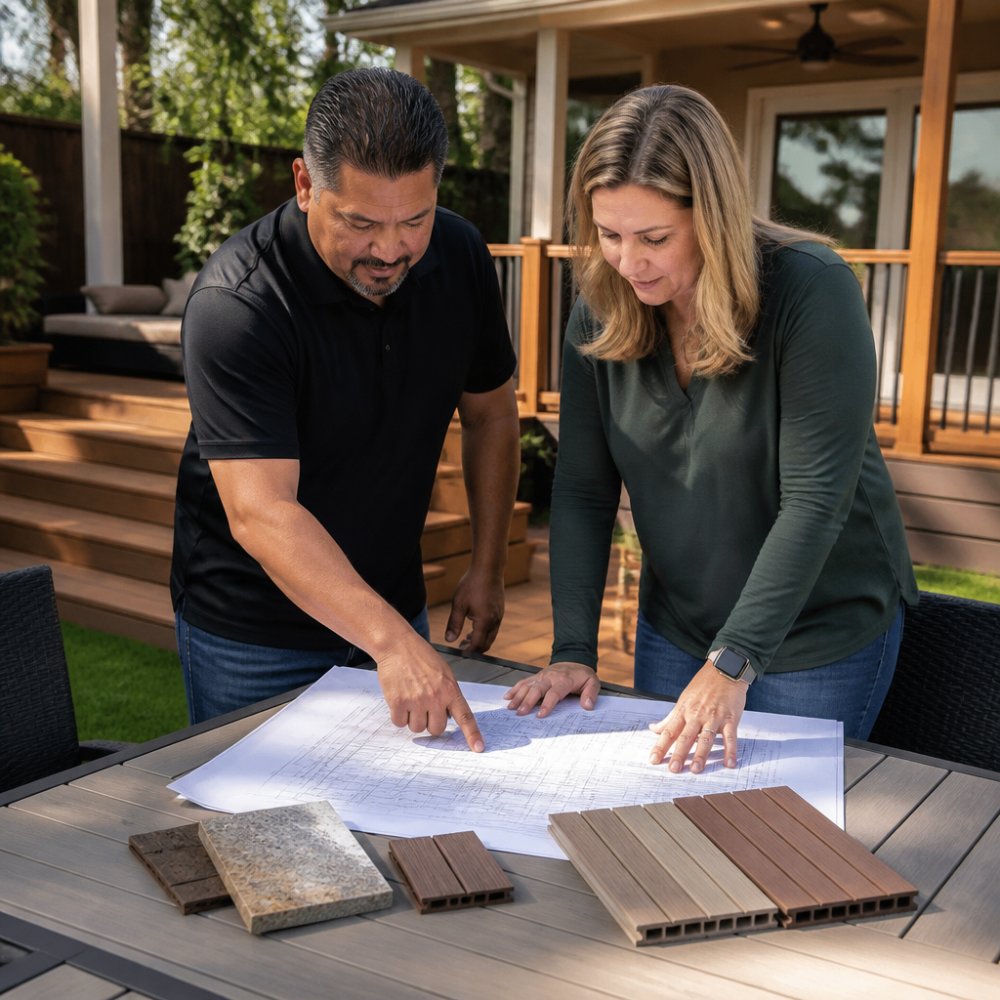
The design phase determines whether your deck will function as envisioned and whether the final cost aligns with your budget. A professional contractor guides you through understanding how deck size, shape, complexity, and features affect total cost. Many homeowners underestimate how design choices compound expenses across material and labor categories.
Hidden Costs and Long-Term Ownership
Many homeowners focus on installation costs while overlooking expenses that accumulate over the deck's lifespan. Maintenance costs for wood decks include annual or biennial staining, sealing, and power washing. These aren't optional, neglecting maintenance accelerates deterioration and shortens the deck's useful life significantly.
Permits, Inspections, and Building Code Compliance
Building permits and inspections are non-negotiable requirements in most jurisdictions. The permit process ensures your deck meets structural and safety standards. Inspectors verify that footings reach proper depth, joists are correctly sized and spaced, and ledger board connections prevent water intrusion into your home's structure.
Return on Investment for Your Deck Project
Evaluating return on investment requires understanding what value a deck adds to your home and how that compares to your installation cost. A well-designed, professionally installed deck increases outdoor living space and can improve property appeal. However, the financial return depends on several factors.
Frequently Asked Questions
What is the average cost per square foot for a custom deck installation?
The cost per square foot for custom deck installation varies significantly based on materials, site conditions, and complexity. Pressure-treated lumber decks typically cost less than composite or high-end hardwood options. Labor rates, local building codes, and the extent of site preparation also influence pricing. For an accurate estimate tailored to your project, contact a licensed contractor who can assess your specific deck design, square footage, and site conditions.
How do material choices impact the total cost of a deck installation?
Material selection is one of the largest cost drivers in deck projects. Pressure-treated lumber offers affordability but requires regular maintenance. Composite decking costs more upfront but eliminates staining, sealing, and frequent repairs over time. Tropical hardwoods provide durability and aesthetics but come at a premium price. Your choice affects not only initial installation costs but also long-term maintenance requirements, making it essential to balance your budget with your desired maintenance level.
What factors influence the labor costs for professional deck installation?
Labor costs depend on project complexity, deck size, site conditions, and local rates. A straightforward rectangular deck on level ground costs less than one requiring extensive excavation, multiple levels, or intricate railing systems. Stairs, built-in seating, and finish carpentry add labor hours. Professional contractors factor in building permit requirements, foundation work, and structural integrity standards. Experience and licensing also affect rates, a licensed, insured contractor ensures code compliance and quality craftsmanship.
Does a custom deck add significant value to a home?
A well-designed custom deck enhances both functionality and curb appeal, making it an attractive feature for potential buyers. Outdoor living spaces have become increasingly valuable in the residential market. However, return on investment varies based on deck quality, materials, design, and local market conditions. A professionally installed deck with high-quality materials and thoughtful design typically recoup a portion of its investment at resale. Consult with a local contractor to understand how your specific project might impact your home's resale value.
What permits and inspections are required for deck construction?
Most jurisdictions require building permits for deck construction to ensure compliance with local building codes and zoning regulations. Permit requirements vary by location and deck specifications, size, height, proximity to property lines, and structural design all factor in. Inspections typically occur at foundation, framing, and final completion stages. A licensed contractor handles permit applications and coordinates inspections, ensuring your deck meets all structural integrity and safety standards. This protects both your investment and your home's legal standing.
How long does a custom deck installation project typically take?
Timeline depends on deck size, design complexity, site conditions, and permit approval timeframes. A straightforward deck may take 2-4 weeks from permit approval to completion, while multi-level decks with elaborate railings, stairs, and site preparation can extend to 6-8 weeks or longer. Excavation, foundation work, framing, and finish carpentry all add time. Weather conditions and material availability also influence schedules. A transparent contractor provides a realistic timeline upfront and keeps you informed of any changes affecting your project schedule.
Ready to start your project?
CH&L Landscaping & Concrete serves Concord, Martinez, and the greater Bay Area. Get a free, no-obligation estimate today.
Get a Free Estimate