Custom Shade Structures for Patios: 2026 Buying Guide
Table of Contents
- 7 Custom Shade Structures for Patios That Deliver
- Modern Pergola Design Ideas for Luxury Backyards
- Shade Structure Material Comparison: Wood, Aluminum, and Fabric
- Permits and Building Codes for Custom Shade Structures
- DIY vs. Professional Installation: Cost-Benefit Analysis
- Maintenance Tips for Patio Shade Structures
- Smart Home Integration for Modern Shade Systems
- Conclusion
- Frequently Asked Questions
Last Updated: September 16, 2026
7 Custom Shade Structures for Patios That Deliver
Custom shade structures for patios are site-built or modular overhead systems that block direct sun, lower surface temperatures, and extend usable hours outdoors. At CH&L Landscaping & Concrete, we've installed these across Bay Area backyards for more than 15 years, and the lesson repeats: the structure matters less than how it handles wind, sun angle, and drainage on your lot.
The short version: a motorized louvered pergola gives adjustable shade and rain protection at the largest investment. A shade sail is the fastest, most affordable way to cover an awkward corner. A hard-top gazebo splits the difference, and a site-built pavilion is the only option that reads as permanent architecture rather than an accessory.
The seven options below are ranked by real-world performance, not catalog photos.
| Structure | Shade Control | Best For | Installation |
|---|---|---|---|
| Motorized louvered pergola | Fully adjustable | Year-round use | Professional |
| Modular cabana | Adjustable panels | Small patios | Professional |
| Hard-top gazebo | Fixed | Dining areas | Semi-DIY |
| Shade sail | Fixed, tensioned | Budget coverage | DIY possible |
| Wood pergola | Partial, slatted | Climbing plants | DIY or pro |
| Aluminum patio cover | Fixed | Low maintenance | Professional |
| Site-built pavilion | Fixed, engineered | Permanent architecture | Professional |
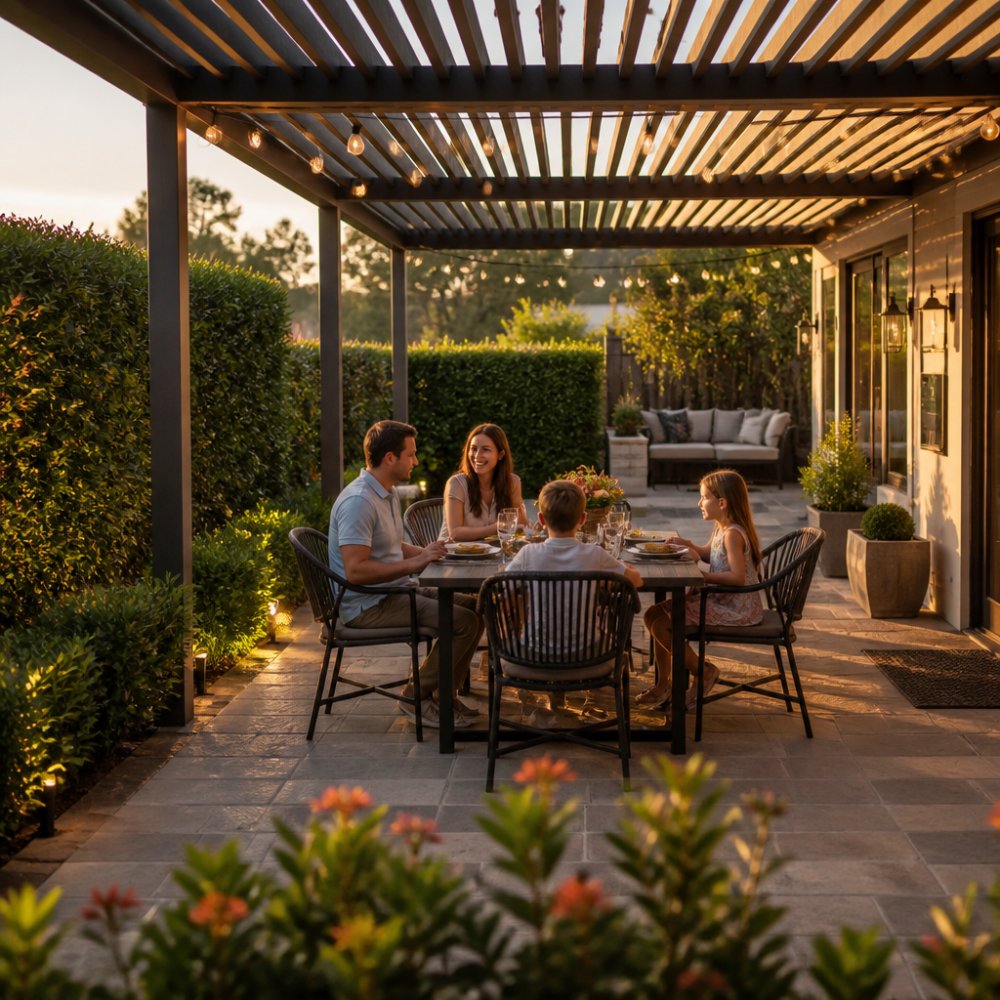
1. Motorized Louvered Pergola (StruXure Pergola X), The StruXure Pergola X uses a motorized louvered roof that rotates to control sunlight and ventilation, plus an integrated gutter that channels rain off the patio. It's the strongest pick for year-round use, though it's the highest investment here and needs professional install to keep the warranty intact.
2. Modular Cabana (StruXure Cabana X), The Cabana X applies the same louvered technology in a compact, modular footprint, ideal for tight patios that still want adjustable shade. Optional privacy screens and lighting are available; professional installation is typically required.
3. Hard-Top Gazebo (Hampton Bay Holden), A pre-engineered hard-top gazebo delivers solid, consistent shade with integrated curtain and netting tracks for privacy. The tradeoff: manufacturer sizes won't hug an irregular patio edge the way custom fabrication will.
4. Shade Sails (Artpuch and Amgo), A shade sail is a tensioned fabric panel anchored to posts or existing walls. Artpuch's HDPE sails block a high percentage of UV rays and breathe well, keeping heat from pooling underneath; Amgo offers commercial-grade fabric in custom sizes and shapes. Both need proper mounting points and periodic tensioning.
5. Wood Pergola (Toja Grid System), Toja Grid sells heavy-duty steel brackets that let you build a custom-sized wood pergola without complex joinery. You buy standard lumber separately, keeping material costs predictable, and the dimensions are entirely yours.
6. Aluminum Patio Cover (Alumawood), Alumawood systems use embossed aluminum with a wood-grain finish, giving you the look of timber without rot, termites, or annual sealing. Solid and lattice roof styles are available; professional installation preserves the warranty.
7. Site-Built Pavilion (Solid Structures Custom Pavilions), A bespoke pavilion is engineered for your site and built from wood, stone, or metal to match your home's architecture.
Modern Pergola Design Ideas for Luxury Backyards
Modern pergola design ideas for luxury backyards have moved away from the freestanding four-post look toward structures that connect to the house and define a room outdoors. The most requested configurations pair a louvered or slatted roof with integrated lighting, a built-in kitchen or bar counter, and a hardscape border that anchors the footprint.
Three directions worth considering:
- Connected overhangs. Extend the roofline from the house so the pergola reads as architecture, not an add-on.
- Mixed materials. Powder-coated aluminum frames with wood-look finishes hold up better than natural timber near coastal air.
- Layered lighting. Recessed fixtures in the beams plus low-voltage path lighting extend evening use without glare.
Shade Structure Material Comparison: Wood, Aluminum, and Fabric
Choosing between wood, aluminum, and fabric comes down to maintenance appetite, wind exposure, and how your climate stresses the material, chiefly salt air, snow load, and humidity. Here's how each performs, plus the trade-offs you won't see in a catalog.
| Material | Maintenance | Lifespan | Best Climate Fit | Worst Climate Fit |
|---|---|---|---|---|
| Wood | Seal every 1-2 years | Moderate | Inland, low humidity | Coastal, high humidity |
| Aluminum | Rinse occasionally | Long | Coastal, high humidity | High-wind (needs engineering) |
| Fabric (HDPE) | Retension, replace panels | Shorter | Any, best for seasonal shade | High snow, high wind |
Permits and Building Codes for Custom Shade Structures
Most jurisdictions treat a shade structure as an accessory structure, and many require a building permit once it exceeds a certain height or square footage. Attached pergolas and pavilions face stricter review than freestanding shade sails because they impose loads on the home's structure. Before you buy, check your building department's requirements for setbacks, height limits, wind-load ratings, and electrical permits if you're adding lighting or a motor.
DIY vs. Professional Installation: Cost-Benefit Analysis
DIY makes sense for tensioned shade sails and modular bracket systems where the manufacturer supplies an installation kit and mounting points already exist. It stops making sense the moment the structure attaches to the house, carries a motor, or requires electrical work, those jobs need a licensed contractor, and in many areas the permit itself requires one.
Maintenance Tips for Patio Shade Structures
Maintenance tips for patio shade structures are mostly about inspection timing, and the schedule depends on material. Aluminum frames need an occasional rinse to clear salt and dust. Wood needs an annual check for cracking, loose fasteners, and finish wear, with resealing every year or two. Fabric panels need retensioning as they relax and replacement when UV degradation thins the weave.
A practical seasonal routine:
- Inspect all mounting hardware and anchor points each spring
- Tighten bolts and turnbuckles after the first windy season
- Clear debris from gutters and roof channels before the rainy months
- Test motorized louvers and remotes before heavy-use season
- Wash fabric panels with mild soap, never a pressure washer
Smart Home Integration for Modern Shade Systems
Smart home integration turns a shade structure from a static roof into a responsive system that reacts to weather, sun position, and your schedule. Most budget installations treat automation as an afterthought, but the decision to integrate should happen during design, not after the structure is built.
Design-phase checklist for smart integration:
- Decide on control platform (standalone app, voice, or whole-home system)
- Run low-voltage wiring and conduit for sensors, motors, and lighting
- Choose a structure with a compatible control module
- Plan for a dedicated power source if required
- Test sensor placement to avoid false triggers from sprinklers or shade
Conclusion
The hardest part of a shade project isn't picking a structure, it's getting the sun angle, wind exposure, permitting, and drainage right at the same time, and that's where most homeowners get stuck.
Frequently Asked Questions
What are the most durable materials for custom patio shade structures?
Aluminum and high-density polyethylene (HDPE) fabric are the most durable options for custom shade structures. Aluminum resists rust and rot, making it ideal for year-round use, while HDPE fabric blocks up to 95% of UV rays and resists fading. Wood requires more maintenance but offers a classic look. For coastal or high-wind areas, powder-coated aluminum frames with stainless steel hardware provide the best longevity and structural integrity.
Do custom shade structures require building permits?
Permit requirements vary by municipality and depend on the structure's size, height, and whether it is attached to your home. Many areas require permits for permanent structures like solid-roof pavilions or gazebos, while temporary shade sails may not need one. Always check with your local building department before installation. A licensed contractor can help navigate the permitting process and ensure your structure meets all local codes.
How much do custom shade structures cost?
Pricing for custom shade structures depends on size, materials, and installation complexity. Shade sails are generally the most affordable option, while motorized louvered pergolas and custom pavilions represent a higher investment. Because every project is unique, we recommend requesting a free estimate from a qualified contractor to get accurate pricing for your specific patio layout and design preferences.
What is the difference between a pergola and a shade sail?
A pergola is a permanent structure with a frame and either fixed or adjustable roof slats, offering partial to full shade and architectural definition. A shade sail is a tensioned fabric panel anchored to posts or existing structures, providing flexible, breathable shade at a lower cost. Pergolas integrate better with luxury landscaping and smart home features, while shade sails suit budget-conscious or temporary setups.
How can custom shade structures increase property value?
Custom shade structures extend your outdoor living space, making your backyard usable year-round and more attractive to buyers. Features like motorized pergolas, integrated lighting, and weatherproof materials signal quality and low maintenance. In competitive real estate markets, a well-designed patio cover or pavilion can differentiate your home and justify a higher asking price by adding functional square footage to your property.
Ready to start your project?
CH&L Landscaping & Concrete serves Concord, Martinez, and the greater Bay Area. Get a free, no-obligation estimate today.
Get a Free Estimate