Hardscape Design Ideas for Backyards: 2026 Guide
Table of Contents
- Modern Backyard Patio Design
- Low-Maintenance Backyard Landscaping
- Custom Masonry and Stone Features
- Outdoor Kitchens and Dining Areas
- Fire Pits and Fireplaces
- Walkways, Garden Paths, and Pool Decks
- Permeable Hardscaping and Drainage
- DIY vs. Professional Installation: Cost Analysis
- Frequently Asked Questions
Last Updated: September 12, 2026
Modern Backyard Patio Design
Great hardscape design ideas for backyards start with the patio, because that's where most outdoor living actually happens. This guide from CH&L Landscaping & Concrete covers eight directions worth considering in 2026, from material choices to drainage and installation trade-offs. Modern patio design favors large-format pavers and stone slabs over busy patterns, with clean lines that make a small courtyard feel bigger. A common mistake is choosing a paver purely on color. Texture and joint width matter just as much, because they determine how the surface feels underfoot and how well it drains. Homeowners planning a renovation can verify contractor standing through the California Contractors State License Board before signing anything.
Low-Maintenance Backyard Landscaping
Low-maintenance backyard landscaping is a design approach that pairs hardscape structure with softscape plantings that need little water, pruning, or replacement once established. In practice, this means fewer lawn areas, more groundcover, and drip irrigation zoned to the plants rather than the whole yard. The U.S. Environmental Protection Agency's WaterSense program outlines how efficient irrigation and appropriate plant selection reduce outdoor water use. A common mistake is treating low-maintenance as no-maintenance. Even a well-designed yard needs seasonal checks on irrigation emitters and joint sand. For homeowners who want the planting plan handled alongside the hardscape, CH&L Landscaping & Concrete builds water-efficient softscape into the design phase rather than adding it afterward.
Custom Masonry and Stone Features
Custom masonry and stone features give a backyard its sense of permanence. Think stone-clad seat walls, veneered columns, a built-in bench, or a courtyard wall that doubles as privacy screening. The design decision that matters most is consistency: the same stone family used across a retaining wall, a fire feature, and a walkway edge reads as intentional, while mixed materials can look assembled.
Texture does the heavy lifting here. A split-face finish catches light differently than a honed slab, and that difference changes how a structure reads from the house. Many homeowners find that one statement masonry element, executed well, adds more curb appeal than several smaller features spread across the yard.
Matching Stone to Climate and Exposure
Most design roundups treat stone as a purely visual choice. In practice, the material has to survive the local freeze-thaw cycle, summer heat, and moisture exposure. A few patterns hold up across projects:
- Freeze-thaw regions: Dense, low-absorption stones such as granite, basalt, and certain quartzites resist spalling better than porous sandstones or some limestones. Manufactured concrete pavers engineered for freeze-thaw performance are a common alternative when natural stone budgets are tight.
- Hot, dry regions: Light-colored stone and concrete stay cooler underfoot and fade less under intense UV. Dark basalt and charcoal pavers look dramatic but absorb heat and can be uncomfortable near a pool deck or seating area.
- Wet or coastal exposure: Salt spray and constant moisture accelerate deterioration in softer stones. Granite, dense travertine, and high-density concrete products hold up better, and stainless or hot-dipped galvanized hardware avoids the rust streaks that show up on lesser fasteners.
Finishes and How They Age
Finish choice affects both grip and long-term appearance. A thermal or bush-hammered finish provides traction on walkways and pool decks; a honed or polished finish looks refined but becomes slippery when wet and is better reserved for vertical surfaces or covered areas. Split-face veneer gives depth and shadow but traps more dust, so it benefits from periodic cleaning.
A Simple Maintenance Schedule
Masonry is durable, not maintenance-free. A practical rhythm looks like this:
- Seasonally: Rinse surfaces, clear debris from joints and weep holes, and check for efflorescence (the white mineral bloom that signals moisture migration).
- Annually: Re-sand polymeric or stabilized joints where they've eroded, inspect retaining wall drainage, and reseal natural stone only if the manufacturer or installer recommends it, over-sealing traps moisture and can cause spalling.
- As needed: Re-point mortar joints before small cracks become structural, and address any settling at wall bases immediately.
For homeowners who want the design, materials, and installation handled as one project, CH&L Landscaping & Concrete offers a custom design phase included with each project and a four-step process that keeps work on schedule.
Outdoor Kitchens and Dining Areas
An outdoor kitchen works best when it's planned around how you actually cook and gather, not around a catalog layout. The core elements are a counter at comfortable prep height, storage that keeps tools out of the weather, and enough clear space behind seating for people to move without squeezing past each other. Dining areas benefit from shade, which is why a pergola or pavilion often gets designed at the same time as the counter rather than added later. The thing most guides miss is ventilation and clearance around any cooking appliance. Build those into the layout from the start, and the space stays usable year-round instead of becoming a fair-weather novelty.
Fire Pits and Fireplaces
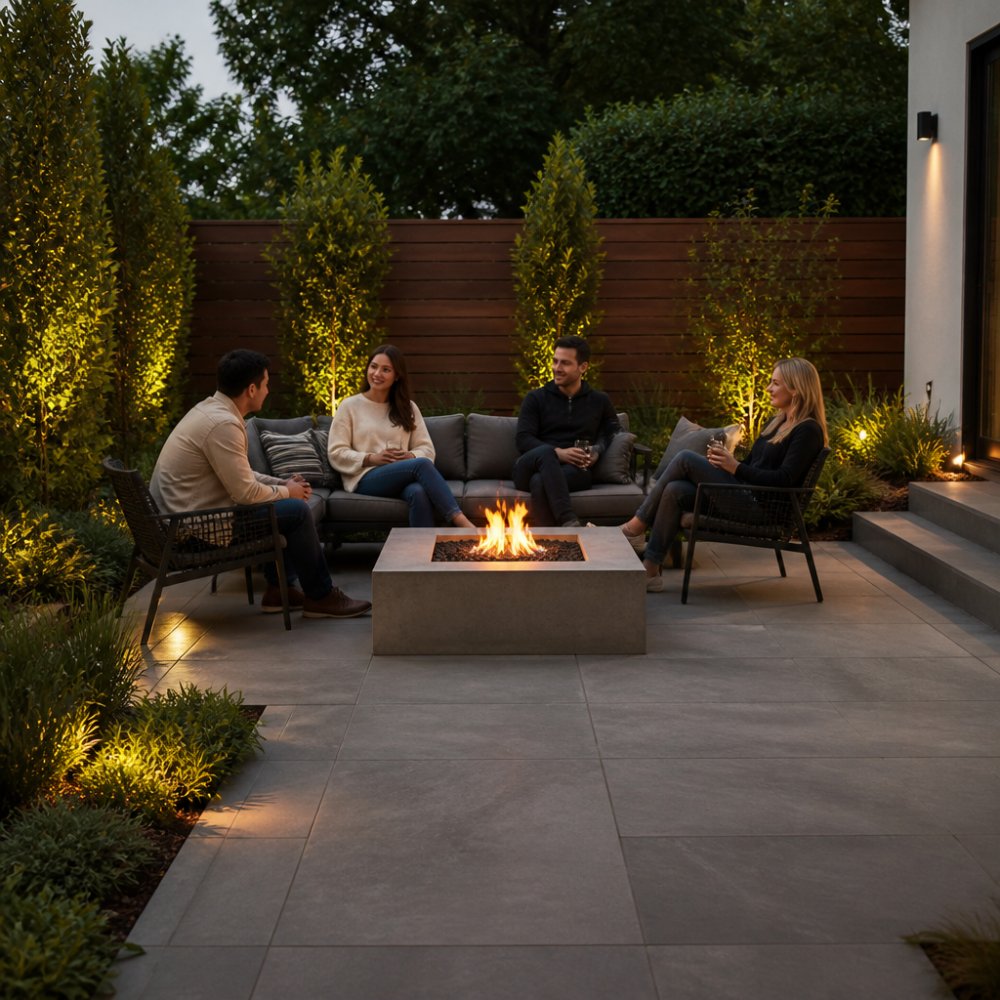
Fire features extend how late into the evening a backyard gets used, and they're one of the most requested hardscape additions for good reason. A fire pit suits an open gathering circle, while a masonry fireplace anchors a covered seating area and offers more privacy screening at the same time.
Before installing anything that burns, check local burn regulations and any homeowner association rules, since restrictions vary by jurisdiction and season. In many areas, burn bans activate during dry spells, and some municipalities restrict wood-burning features outright in favor of gas. Confirm the rules before the design is finalized, not after the footing is poured.
Choosing the Right Fuel
The fuel decision shapes the entire build:
- Wood-burning: Authentic crackle and aroma, but requires a spark screen, ash cleanup, and a safe distance from structures and overhanging branches. Best for open yards with room to spare.
- Natural gas: Instant on/off, no ash, and consistent flame height. Requires a gas line run during construction, which is far easier to add before the patio is finished.
- Propane: Similar convenience to natural gas without a permanent line, but needs a tank that must be hidden and refilled. Common in neighborhoods without gas service.
Materials That Take the Heat
Not every stone belongs in a fire feature. Dense materials such as granite, basalt, fire brick, and cast concrete handle repeated thermal cycling well. Avoid river rock, some sandstones, and certain manufactured veneers near the flame, trapped moisture in porous stone can cause it to crack or spall, and some finishes discolor permanently under heat. The firebox itself should be lined with fire brick or an equivalent refractory material, regardless of what the visible surround looks like.
Sizing, Clearance, and Safety
Size the feature to the seating around it. A pit too large for the space radiates heat past everyone sitting at it; a pit too small feels like a candle. A common pattern is a 36- to 48-inch interior diameter for a gathering of four to six people, with seating set back far enough that knees and fabric stay clear of the flame. Keep combustible materials, low tree limbs, and structure walls at a safe distance, and check the manufacturer's clearance specs for any insert or burner.
Keeping It Looking New
A short maintenance rhythm keeps a fire feature safe and presentable:
- After each use: Let ashes cool completely before disposal, and keep the bowl covered when not in use to prevent water pooling.
- Seasonally: Inspect the firebox lining for cracks, check gas lines and burners for obstructions, and clear debris from ventilation gaps.
- Annually: Have gas components inspected, and re-seal or re-point masonry surrounds as needed.
For homeowners who want the design, materials, and installation handled as one project, CH&L Landscaping & Concrete offers a custom design phase included with each project and a four-step process that keeps work on schedule.
Walkways, Garden Paths, and Pool Decks
Walkways and pool decks are where safety and aesthetics have to agree. Pool deck surfaces should be slip-resistant when wet, and joints should drain away from the water rather than toward it. Garden paths serve a different purpose: they set the pace of the yard and connect zones, so a narrower path with a textured finish often works better than a wide, uniform walkway. For a walkway, gravel, stone slabs, and pavers each solve a different problem. Gravel drains fastest and costs least to install; slabs handle heavy foot traffic and read as more formal; pavers sit in the middle and are the easiest to repair section by section if one settles.
| Feature | Best Material Direction | Maintenance Level | Stands Up To |
|---|---|---|---|
| Walkway | Pavers or stone slabs | Low | Daily foot traffic |
| Garden path | Gravel or stepping stones | Low to moderate | Light use, drainage |
| Pool deck | Slip-resistant pavers | Moderate | Constant moisture |
| Driveway apron | Concrete or heavy pavers | Low | Vehicle weight |
Permeable Hardscaping and Drainage
Permeable hardscaping is a surfacing approach that lets water pass through the joints or the material itself and soak into the ground instead of running off. It's the angle most design roundups skip, and it's often the one that decides whether a yard stays usable after a storm. Permeable pavers, gravel systems, and open-joint stone all manage runoff differently, and the right choice depends on soil, slope, and how much impervious surface already exists on the property. Get drainage wrong and you'll see standing water, settled pavers, and erosion at the edges within a season or two. Get it right and the hardscape protects the foundation, the plantings, and itself.
DIY vs. Professional Installation: Cost Analysis
DIY versus professional installation comes down to more than the quote. The real variables are site preparation, base compaction, drainage grading, and how the finished surface handles settling over time. Excavation and grading are where most DIY hardscape projects stall, because the equipment and the compaction work are the parts that can't be skipped. Rental marketplaces such as DOZR's equipment rental platform make skid steers and compactors accessible for homeowners who want to handle prep themselves, though operator experience matters for safety. Materials are widely available through retail channels like The Home Depot's project services, which also refers licensed installers.
What you're paying a professional for is the base, the drainage, and the sequencing. A properly compacted base and correct slope are invisible in the finished yard but determine whether the pavers stay level for a decade or shift within a year. Installation timelines vary with scope and site access, so ask for a project schedule rather than a single completion date.
| Factor | DIY | Professional Installation |
|---|---|---|
| Base prep and compaction | Rented equipment, steep learning curve | Included, done to spec |
| Drainage and grading | Easy to get wrong | Engineered into the plan |
| Material sourcing | Retail or marketplace | Supplied and staged |
| Repairs and settling | Owner's responsibility | Often covered by workmanship terms |
| Timeline | Weekends over months | Scheduled start to finish |
For homeowners who want the design, materials, and installation handled as one project, CH&L Landscaping & Concrete offers a custom design phase included with each project and a four-step process that keeps work on schedule. The team has completed residential hardscape, masonry, and shade structure work for more than 15 years and holds CSLB License #1010306.
Frequently Asked Questions
What are the most durable materials for backyard hardscaping?
Natural stone like granite and travertine, and high-quality concrete pavers, offer exceptional durability. These materials resist freeze-thaw cycles, heavy foot traffic, and fading. For a hardscape design that lasts decades, choose materials with a proven track record and ensure professional installation.
How do I balance hardscape and softscape in my backyard design?
A common guideline is to aim for a 50/50 split, but the right ratio depends on your lifestyle. If you entertain often, you might prefer more hardscape for patios and walkways. If you want a lush garden, increase softscape. Use hardscape to define functional zones, then fill remaining areas with low-maintenance plants and groundcover.
What are the latest hardscaping trends for 2026?
In 2026, expect to see permeable pavers for eco-friendly drainage, warm earth tones, and mixed-material designs that combine stone with wood or metal. Outdoor kitchens with pizza ovens and integrated seating are also popular. Smart irrigation and lighting systems are increasingly integrated into hardscape design for convenience and efficiency.
How does professional hardscape design add value to a home?
A well-designed hardscape expands usable outdoor living space, boosting curb appeal and functionality. Features like outdoor kitchens and fire pits are particularly attractive to buyers, making your property stand out in a competitive market.
What are the best hardscape features for small backyard spaces?
For small yards, focus on multi-functional elements like built-in benches with storage, vertical gardens, and compact fire pits. A single large patio with a defined dining area can make the space feel larger. Use light-colored pavers and strategic lighting to create an illusion of space.
The hardest part of a backyard renovation isn't picking a paver color. It's coordinating design, drainage, materials, and installation so the finished space holds up and stays low-maintenance. CH&L Landscaping & Concrete handles that coordination end to end, with custom design included, water-efficient planting, and a process built to keep projects on time and on budget. Get a free estimate from CH&L Landscaping & Concrete and start planning an outdoor space built to last.
Ready to start your project?
CH&L Landscaping & Concrete serves Concord, Martinez, and the greater Bay Area. Get a free, no-obligation estimate today.
Get a Free Estimate