How to Design a Small Backyard: 2026 Guide
Table of Contents
- Start With a Site Analysis and a Wish List
- Define Zones to Maximize Every Square Foot
- Small Backyard Hardscape Ideas That Anchor the Space
- Layer Your Planting for Depth and Multi-Season Interest
- How to Increase Backyard Privacy Without Closing It In
- Design for Maintenance and Climate Reality
- Work With a Professional for a Seamless Build
- Frequently Asked Questions
Last Updated: September 4, 2026
Designing a small backyard is less about what you have to give up and more about how deliberately you use every square foot. A compact space rewards careful planning: when you can't hide mistakes behind acreage, each choice carries more weight. At CH&L Landscaping & Concrete, we've spent over 15 years turning constrained Bay Area lots into outdoor living areas that feel twice their size through spatial planning, layered planting, and purposeful hardscaping.
The most important rule for how to design a small backyard is to start with a plan, not a Pinterest board. Aesthetic inspiration helps, but a successful small space depends on site analysis, defined zones, and honest conversations about maintenance and climate. This guide walks through the seven decisions that matter most, from the first site survey to the final build, so you can create an outdoor room that works year-round.
Start With a Site Analysis and a Wish List
A site analysis is the practice of documenting your yard's existing conditions before you change anything. Walk the space at different times of day, note where the sun hits and where shadows linger, check drainage patterns after rain, and measure the actual dimensions. This baseline prevents expensive mistakes like placing a dining area in full afternoon sun or building a patio over a low spot that collects water.
Write down how you intend to use the space before you think about plants or pavers. A wish list might include outdoor dining for six, a fire pit for cool evenings, or a vegetable bed. Rank those desires, because a small yard rarely accommodates everything. The USDA plant hardiness zone map is a useful first reference for understanding your growing conditions, and local building departments can clarify setback rules that affect where structures may go.
Define Zones to Maximize Every Square Foot
Small backyards work best when each area has a clear job. Instead of one vague patio, plan distinct zones for dining, lounging, and planting, then connect them with a visual axis, a clear sightline that draws the eye through the space. Even a 400-square-foot yard can feel generous when zones flow into one another rather than competing.
A common approach is to anchor the largest zone, usually dining or lounging, against the house, then place secondary functions along the edges. Built-in seating along a fence saves the footprint that freestanding chairs would consume, and an outdoor rug can define a lounging area without adding a single wall. If you want both a fire pit and a dining table, position them at opposite ends of the yard so each feels like its own destination.
Small Backyard Hardscape Ideas That Anchor the Space
Hardscaping is the backbone of any small backyard design. Patios, pathways, retaining walls, and built-in structures give the space structure and year-round usability, while softscaping, the living plant material, softens those hard edges. A balanced ratio in a compact yard typically favors hardscape because it requires no seasonal maintenance and extends the outdoor living season (extension.umn.edu).
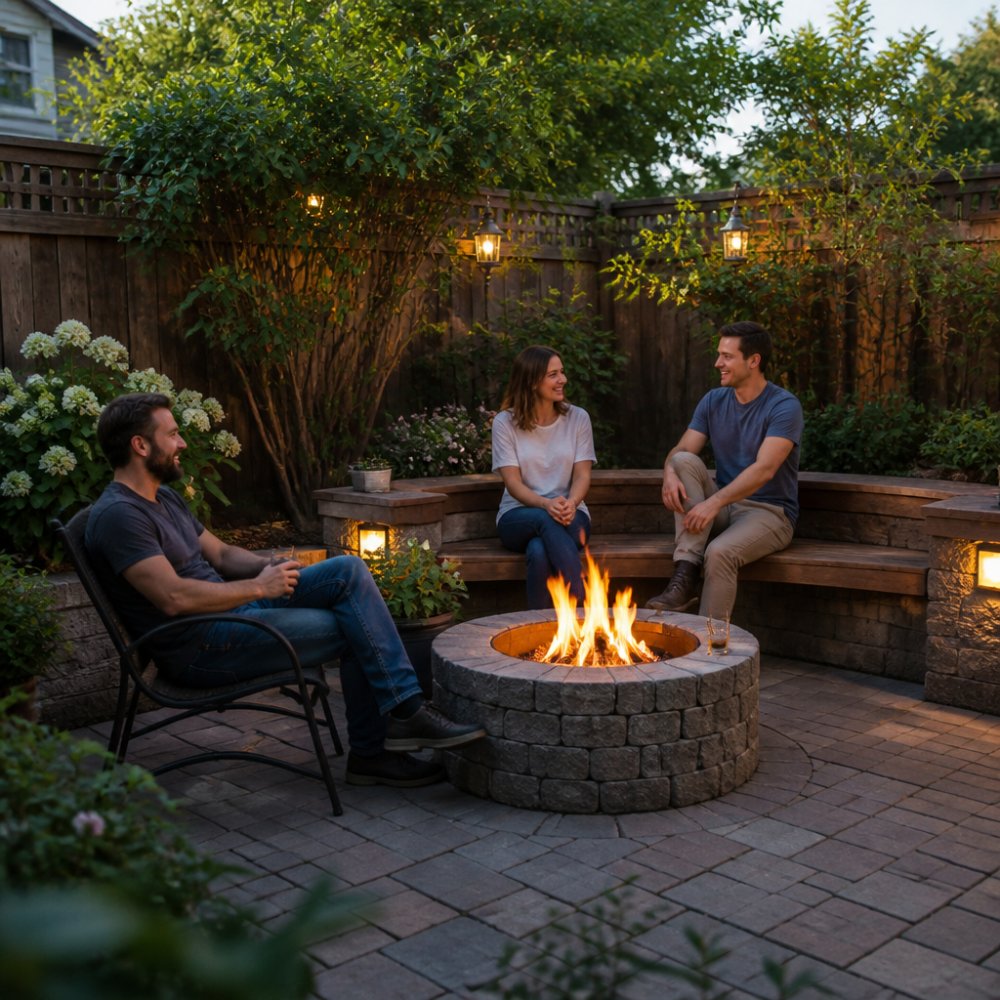
Concrete pavers are a strong choice for small yards because they install without heavy equipment and allow for curved or geometric patterns that add visual interest. A small backyard hardscape idea that works well is to run the paving all the way to the fence line, eliminating awkward strips of unused grass and making the yard feel intentional. Raised planter beds built from the same masonry double as seating and define zone boundaries without consuming floor space.
For drainage, grade the patio away from the house at a gentle slope, and consider a permeable paver system if your yard has poor drainage. These systems let water filter through the joints rather than pooling on the surface.
Layer Your Planting for Depth and Multi-Season Interest
Planting design in a small yard is about creating depth perception, the illusion that the space extends further than it does. Layered planting, arranging plants in tiers from low groundcovers to mid-height perennials to taller specimens, draws the eye upward and backward, which makes boundaries recede.
Evergreens form the backbone of this scheme because they hold structure through winter. A single ornamental tree or large shrub at the far end of the yard creates a focal point that pulls the eye away from the fence line. Underneath, use native plants and drought-tolerant species suited to your climate; they require less water and fewer interventions once established. Container gardening adds flexibility, allowing you to move color and texture where the season demands.
A small water feature, even a modest wall-mounted fountain, adds sound and motion that mask street noise and make the space feel more immersive. The key is restraint: in a small yard, a few well-chosen specimens outperform a crowded planting bed.
How to Increase Backyard Privacy Without Closing It In
Privacy screening is often the first request from homeowners with small yards, since neighboring windows and fences feel closer when space is tight. How to increase backyard privacy without sacrificing light or airflow comes down to choosing screening that filters rather than blocks.
Solid fences create a closed-in feeling, especially in a compact space. Instead, try vertical planting along the boundary: a trellis with a climbing vine or a row of tall, narrow evergreens softens the line while preserving a sense of openness. Privacy screening with plants also adds the layered greenery that makes a yard feel established.
For seating areas specifically, a shade structure such as a pergola with a retractable canopy provides overhead privacy from second-story windows while defining the zone below. Outdoor curtains on a track offer flexible screening that can be drawn when needed and opened to the view when not.
Design for Maintenance and Climate Reality
A beautiful design you cannot maintain is a failed design. Before finalizing your plan, estimate the weekly time commitment honestly. The most common reason small yards fail is not poor design, but a mismatch between the owner's available time and the landscape's demands.
The Time-to-Maintain Metric
To make an informed decision, evaluate each design element by its weekly maintenance requirement. This 'time-to-maintain' metric is a powerful planning tool that most guides overlook.
- A Traditional Turf Lawn: Expect to spend 30-45 minutes per week for mowing, edging, and trimming in the growing season, plus additional time for watering and seasonal fertilization. This is the highest-maintenance surface you can choose.
- A Native Perennial Planting Bed: Once established (usually after the first year), a well-designed bed of native plants requires roughly 15-30 minutes per week during the peak growing season for deadheading and weeding, and almost nothing in the winter. The key is selecting plants that are naturally adapted to your region's rainfall.
- A Hardscape Patio with Container Plants: This is the lowest-maintenance option. A paver patio needs only occasional sweeping or a quick rinse with a hose. Container plants require more frequent watering than in-ground plants, potentially daily in summer, but the total time is often under 15 minutes a day.
- A High-Maintenance 'English' Border: If you are drawn to roses, topiaries, and annuals, budget for 1-2 hours per week for pruning, feeding, and replacing seasonal plants. This style is beautiful but demands a genuine commitment.
Climate-Specific Plant Selection: A Regional Approach
General advice to 'choose native plants' is only helpful if you know what that means for your specific region. A plant native to the Pacific Northwest will struggle in the arid Southwest, and vice versa. The most reliable method is to consult your state's land-grant university extension service. These institutions publish free, science-based guides on plants that thrive in your specific climate and soil conditions.
For example, a homeowner in a Mediterranean climate (like coastal California) should prioritize drought-tolerant species like manzanita, ceanothus, and California fuchsia, which thrive on winter rain and summer dryness. In contrast, a homeowner in the humid Southeast should look for heat-tolerant natives like oakleaf hydrangea or beautyberry, which can handle the intense summer humidity and afternoon thunderstorms.
The Water Budget
Beyond your time, consider your water budget. In many western states, outdoor water use is a significant portion of household consumption. Replacing a thirsty lawn with a climate-appropriate planting bed or permeable hardscape can cut your outdoor water use by 50% or more (the EPA). This not only lowers your utility bill but also future-proofs your yard against potential water restrictions during drought years. A design that works with your climate, rather than against it, is the most sustainable and stress-free choice you can make.
Work With a Professional for a Seamless Build
While a DIY approach can work for simple projects, a professional becomes essential when your design involves structural changes, complex hardscaping, or utility connections. The decision often comes down to budget, timeline, and the project's technical demands.
The Budget Reality: DIY vs. Professional Installation
A common misconception is that DIY is always cheaper. For a small backyard, the cost of materials is often similar whether you install them yourself or hire a professional. The difference lies in labor, equipment, and the cost of mistakes. A professional brings their own tools, from plate compactors for pavers to concrete saws, which you would otherwise need to rent or buy. More importantly, a professional carries insurance and offers a warranty on their work, protecting your investment if something fails. When you factor in the cost of a weekend of your time, the price gap narrows significantly.
The Permitting and Legal Landscape
Before any major build, you must navigate the legal landscape. This is a step most design inspiration articles omit, yet it can halt a project entirely. The first stop is your local city or county building department to understand setback requirements, which dictate how close structures like pergolas or sheds can be to property lines. You will likely need a permit for any permanent structure, electrical work for lighting or outdoor kitchens, and sometimes for significant grading changes.
If you belong to a homeowners association (HOA), you have an additional layer of rules. HOAs often have strict guidelines on fence height, allowable hardscape materials, and even the color of exterior structures. You will typically need to submit your plans for architectural review before you can begin. Failing to do so can result in fines and a forced removal of the structure, a costly mistake that is entirely avoidable with a quick phone call.
The Contractor Selection Process
When you decide to hire a professional, treat the selection process with the same rigor as the design process. Always verify a contractor's license with your state's licensing board (like the CSLB in California) to confirm they are active and insured. Ask for proof of general liability and worker's compensation insurance. Request a detailed, itemized quote that breaks down material and labor costs, and be wary of a bid that is significantly lower than others, it often indicates a lack of understanding of the scope or a plan to cut corners.
A reputable contractor will also handle the permit process as part of their service, pulling the necessary permits and scheduling inspections. This ensures the work meets local building codes, which protects your safety and your property value. A professional build is not just about aesthetics; it is about ensuring the structure is safe, legal, and durable for decades to come.
Frequently Asked Questions
How can I make a small backyard look bigger?
Use a consistent paver pattern to create an unbroken visual axis, which draws the eye across the full length of the yard. Keep the color palette light and neutral for hardscaping, then add darker accents for contrast. Place larger planters at the far end and smaller ones near the house to exaggerate depth. Avoid tall, dense fencing that blocks sight lines; use horizontal slats or translucent screening instead. Finally, keep the center of the yard open and push furniture to the perimeter.
What are the best hardscaping materials for a small outdoor space?
Large-format pavers or concrete slabs work well because fewer joints make the ground plane feel continuous and less busy. Porcelain pavers are a strong choice for a small backyard design since they resist stains and stay cool underfoot. Consider a permeable paver system to handle drainage without adding visible gutters or catch basins. For vertical surfaces, use the same material as the patio to blur the line between hardscape and fence, which makes the boundary feel less abrupt.
How do I balance hardscaping and planting in a compact yard?
A good rule for small spaces is roughly 60 percent hardscape for living areas and 40 percent planting beds. This keeps the yard usable while still providing softness and seasonal color. Instead of spreading plants thinly along every edge, concentrate them in deep beds along the fence line to create a layered backdrop. Use container gardening for herbs or annuals near the patio so you can rearrange the layout without committing permanent ground space.
Can I include a water feature or fire pit without overwhelming the yard?
Yes, but scale matters. A wall-mounted spill fountain takes up zero floor space and adds sound without eating into your seating area. For fire, choose a low, round fire table with a built-in burner ring rather than a deep fire pit; it doubles as a coffee table when unlit. Keep the flame feature at least 3 feet from any planting bed and check local fire codes before installation, since some areas restrict open flames during dry months.
This article was written using GrandRanker
Ready to start your project?
CH&L Landscaping & Concrete serves Concord, Martinez, and the greater Bay Area. Get a free, no-obligation estimate today.
Get a Free Estimate