How to Hire a Licensed Landscape Contractor
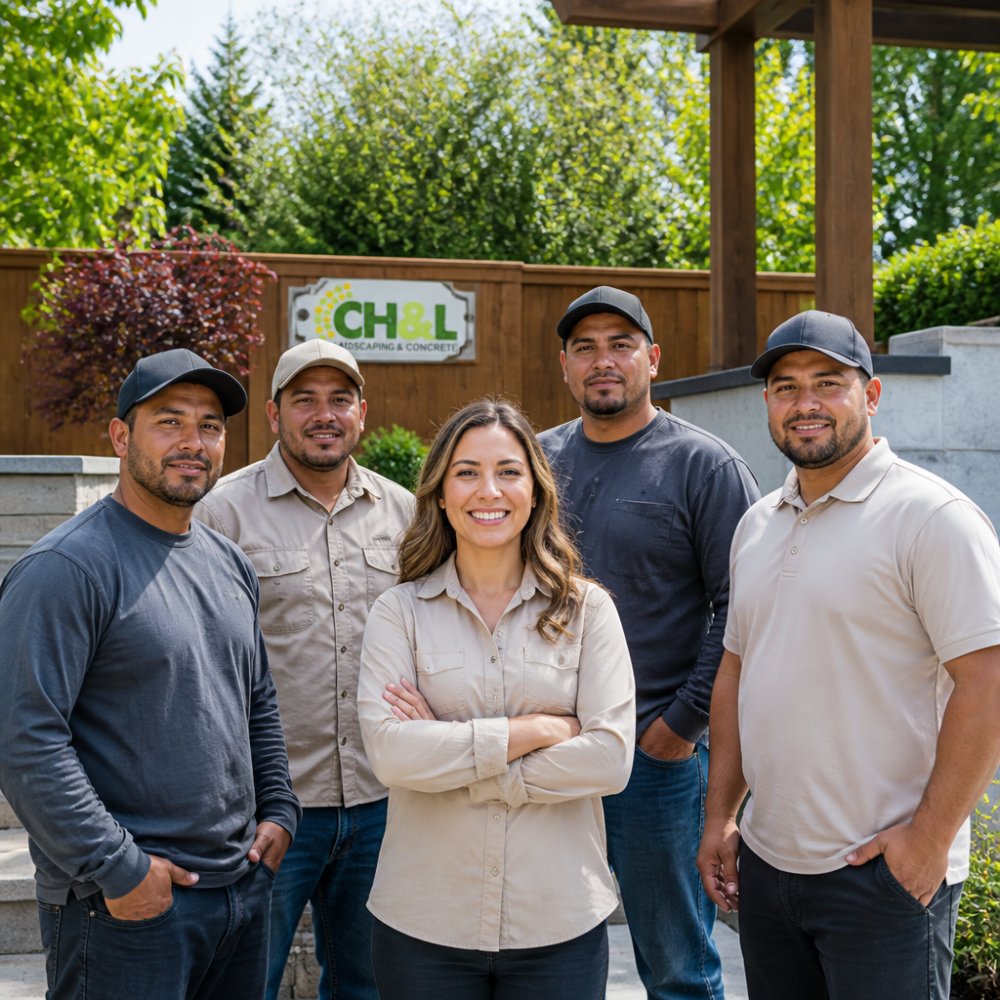
Table of Contents
- Why Hire a Licensed Landscape Contractor
- Step 1: Verify Landscape Contractor License Status
- Step 2: Confirm Insurance and Bonding
- Step 3: Ask the Right Questions to Ask Landscape Contractors
- Step 4: Review the Landscaping Project Contract Template
- Step 5: Understand the Landscape Construction Project Timeline
- Common Mistakes to Avoid When Hiring
- Conclusion
- Frequently Asked Questions
Last Updated: September 3, 2026
Why Hire a Licensed Landscape Contractor
A licensed landscape contractor brings legal accountability, professional standards, and consumer protection to your outdoor project. When you hire someone without proper licensing, you're assuming all the risk, if something goes wrong, there's no regulatory recourse, no insurance to cover damages, and no legal framework protecting your investment.
At CH&L Landscaping & Concrete, we understand that hiring a licensed contractor isn't just about credentials on paper. It's about peace of mind. A licensed professional has passed state exams, maintains bonding and insurance, and operates under legal compliance requirements that protect both you and the work being performed.
The difference between a licensed contractor and an unlicensed operator becomes painfully obvious when problems arise. A licensed contractor carries liability insurance, maintains worker's compensation coverage, and can be held accountable through state regulatory boards. An unlicensed worker disappears, and you're left holding the bill for repairs, injuries, or property damage.
For luxury landscaping projects involving hardscapes, decks, masonry, or custom shade structures, this distinction matters even more. These are substantial investments that add significant value to your home. Protecting that investment through proper contractor vetting ensures your project stays on time and on budget while meeting all local regulations and permit requirements.
Step 1: Verify Landscape Contractor License Status
The first step in hiring a licensed landscape contractor is confirming that the person or company actually holds a valid license. This sounds obvious, but many homeowners skip this step or accept vague assurances instead of checking directly with the state.

Start by asking the contractor for their license number. A legitimate licensed landscape contractor will provide this immediately without hesitation. If they seem evasive, change the subject, or claim "it's just paperwork," that's your first red flag.
Once you have the license number, go directly to your state's regulatory board website. Most states maintain searchable databases where you can verify active licenses. Search for the contractor's name or license number. The database should show:
- Current license status (active, expired, suspended, or revoked)
- License classification (general contractor, landscape contractor, specialty contractor)
- Any disciplinary actions or complaints filed against the contractor
- The contractor's business entity name and address
For example, according to California's Contractors State License Board, you can search any contractor's license status online. This takes five minutes and eliminates the most common deception: hiring someone who claims to be licensed but isn't.
Keep a record of what you find. Take screenshots of the license verification page. If you ever need to file a complaint or dispute, this documentation becomes critical evidence.
Step 2: Confirm Insurance and Bonding
Liability insurance and bonding are your safety nets. They exist to protect you if someone gets injured on your property or if the contractor damages your home during the project.
A reputable licensed landscape contractor carries two types of protection: liability insurance and worker's compensation insurance. These are not optional add-ons, they're legal requirements for most states and a mark of a professional operation.
Ask the contractor for proof of both. Request a Certificate of Insurance that shows:
- General Liability Insurance: Covers damage to your property or injury to third parties caused by the contractor's work
- Worker's Compensation Insurance: Covers injuries to the contractor's employees while working on your project
- Current expiration dates: Insurance must be active during your entire project, not expiring mid-job
Have the contractor provide these documents directly from their insurance agent, not just a photocopy they hand you. Many contractors will email a copy of their Certificate of Insurance immediately. If they can't or won't, that's a serious problem.
A contractor bond is different from insurance. A bond guarantees that the contractor will complete the work as specified in the contract. If the contractor abandons the project or fails to pay subcontractors, the bond covers the loss. Not all states require contractor bonds, but many do. Check your state's requirements and ask whether bonding is required for your project scope.
Verify the insurance coverage limits are adequate for your project. For a luxury landscaping project involving hardscapes, decks, or masonry work, standard liability limits are typical. For larger projects, ask about higher coverage.
Step 3: Ask the Right Questions to Ask Landscape Contractors
The questions you ask reveal whether a contractor understands professional standards and your project's scope. These aren't casual conversation starters, they're screening questions that separate experienced professionals from inexperienced operators.
Start with their experience and approach to your specific project type. Ask:
- "How many years have you been doing landscape construction work?" A licensed landscape contractor with journey-level experience brings deeper problem-solving skills than someone new to the trade.
- "Can you walk me through your typical project process from start to finish?" Listen for whether they mention an on-site consultation, written estimate, design phase, permit requirements, and a detailed timeline. Vague answers suggest they don't have a proven process.
- "What's your approach to staying on budget?" This directly addresses a common customer concern. Ask how they handle change orders and cost overruns. A professional contractor explains their process for scope changes and cost management upfront.
Next, ask about their subcontractors and team. A licensed landscape contractor often works with specialized subcontractors for electrical, plumbing, or structural work. Ask:
- "Who will be doing the actual work, you, your employees, or subcontractors?" If subcontractors are involved, ask whether they're also licensed and insured.
- "How do you manage quality control when subcontractors are involved?" This shows whether they have systems in place to ensure consistent work quality.
Ask about their experience with projects similar to yours in scope and budget. For luxury landscaping projects, this matters significantly. A contractor experienced with high-end custom hardscapes and shade structures understands the detail-oriented expectations and material quality standards that luxury projects demand.
Finally, ask about timeline and disruption:
- "How long will this project take from start to finish?" Get a specific timeline, not "a few weeks."
- "What's your process if the project runs longer than expected?" Understanding their contingency planning prevents surprises.
- "What happens if I need to pause or modify the project mid-way?" A professional contractor has clear policies for change requests and timeline adjustments.
Step 4: Review the Landscaping Project Contract Template
A written contract is non-negotiable. This is where vague conversations become legal agreements. The contract protects both you and the contractor by documenting exactly what will be built, when, and for what price.
A proper landscaping project contract template should include:
Project Scope and Specifications
- Detailed description of all work to be performed
- Specific materials to be used (brand names, grades, colors)
- Site plan or drawings showing the project layout
- Any exclusions (what's NOT included in the project)
Timeline and Milestones
- Project start and completion dates
- Interim milestones and payment schedules tied to completion phases
- Weather delays and how they're handled
- What happens if the contractor misses deadlines
Payment Terms
- Total project cost
- Payment schedule (e.g., deposit, mid-project, completion)
- How change orders affect the total cost
- Conditions for final payment (inspection, punch-list completion)
Insurance, Bonding, and Legal Compliance
- Confirmation that the contractor maintains required insurance and bonding
- Contractor's license number and state
- Acknowledgment that all work complies with local building codes and permit requirements
- Who obtains permits and handles inspections
Warranty and Dispute Resolution
- Workmanship warranty period (typically 1-2 years)
- Material warranty terms
- Process for addressing defects or disputes
- State law governing the contract
Before signing, have an attorney review the contract if the project is substantial. The cost of a brief legal review is minimal compared to the protection it provides. A licensed landscape contractor won't object to this, they expect serious homeowners to review contracts carefully.
Step 5: Understand the Landscape Construction Project Timeline
A realistic landscape construction project timeline depends on scope, weather, permits, and material availability. Understanding typical timelines prevents frustration and helps you spot unrealistic promises.
For a basic landscape installation (planting, simple grading, basic hardscape), expect a few weeks (peer-reviewed research). For a complex luxury project involving custom hardscapes, decks, masonry, or shade structures, expect several weeks or longer. The licensed landscape contractor should provide a detailed timeline breaking the project into phases.
A typical project timeline looks like this:
- Design and Planning, On-site consultation, design refinement, material selection, permit applications if required
- Prep and Demolition, Site preparation, removal of existing features, grading and drainage work
- Construction, Installation of hardscapes, decks, masonry, structural elements
- Finishing, Planting, irrigation, final grading, cleanup
- Inspection and Punch-List, Final walkthrough, addressing any minor issues, final payment
Weather impacts timelines significantly. Rain delays concrete curing. Frozen ground prevents digging. A professional licensed landscape contractor builds weather contingency into their timeline. They don't promise completion in December if your project requires concrete work, concrete doesn't cure properly in freezing temperatures.
Permit timelines also affect your overall schedule. If your project requires building permits, add time for permit approval depending on your local jurisdiction. The contractor should handle this, but you need to understand it's part of the timeline.
Ask the contractor how they communicate timeline updates. Do they provide weekly progress reports? Can you track the project online? Clear communication prevents surprises and keeps the project transparent.
Common Mistakes to Avoid When Hiring
The most damaging mistakes happen before work even begins. These are the patterns that separate successful projects from costly disasters.
Mistake 1: Skipping the License Verification This is the easiest step to skip and the most expensive to regret. Hiring an unlicensed contractor might save money upfront, but it eliminates all legal recourse if something goes wrong. A licensed landscape contractor has passed state exams, maintains required insurance, and operates under regulatory oversight. Skipping verification saves an hour of research but costs you thousands if problems arise.
Mistake 2: Accepting Vague Estimates A contractor who can't provide a detailed written estimate doesn't understand your project scope. Vague estimates lead to surprise costs and change orders. A professional licensed landscape contractor provides a detailed estimate breaking down labor, materials, and timeline. If a contractor says "I'll do it for around a certain amount," ask for a detailed breakdown. If they can't provide one, find another contractor.
Mistake 3: Hiring Based on Price Alone The lowest bid often reflects corners being cut, cheaper materials, less experienced workers, or inadequate insurance coverage. A licensed landscape contractor prices their work to cover proper materials, skilled labor, insurance, and bonding. If one quote is significantly lower than others, ask why. Usually, it's because they're cutting quality or operating without proper licensing.
Mistake 4: Not Getting Everything in Writing Verbal agreements disappear when disputes arise. A written contract protects both you and the contractor. It documents scope, timeline, cost, and who's responsible for what. Without a written contract, you have no legal ground to stand on if the contractor abandons the project or the work doesn't meet expectations.
Mistake 5: Failing to Check References Ask for references from recent projects similar to yours. Call at least three. Ask whether the project finished on time and on budget, and whether they'd hire the contractor again. A licensed landscape contractor with years of experience will have strong references. If they refuse to provide them or references are negative, that's a warning sign.
Mistake 6: Not Understanding Local Regulations Some projects require permits. Some require inspections. Some have HOA approval requirements. A professional licensed landscape contractor knows your local regulations and includes permit costs and timelines in their estimate. If a contractor says "we don't need permits for this," verify that claim with your local building department. Operating without required permits exposes you to fines and forced removal of the work.
Conclusion
Hiring a licensed landscape contractor is the foundation of a successful luxury landscaping project. Verification, insurance confirmation, detailed contracts, and clear communication protect your investment and ensure your outdoor space is built to last.
CH&L Landscaping & Concrete brings 15+ years of licensed, insured expertise to every project. Our proven four-step process includes custom design, transparent cost management, and professional craftsmanship that keeps projects on time and on budget. Contact CH&L Landscaping & Concrete for a free estimate and transform your backyard into a beautiful, functional outdoor living space.
Frequently Asked Questions
Why is it important to hire a licensed landscape contractor?
A licensed landscape contractor has met state regulatory board requirements, carries proper insurance, and provides legal recourse if problems arise. Licensed contractors are bonded and insured, protecting you from liability if workers are injured on your property. They also understand permit requirements and local regulations, ensuring your project complies with all legal standards. Hiring unlicensed workers exposes you to financial risk, poor workmanship, and potential legal complications.
How do I verify a landscape contractor's license status?
Contact your state's regulatory board or licensing agency, most states maintain public databases where you can search by contractor name or license number. Ask the contractor directly for their license number and verify it independently before signing any agreement. Check that their license is current and in good standing, with no disciplinary actions. Request proof of worker's compensation insurance and liability insurance as additional verification of their professional standing and contractor classification.
What should be included in a professional landscaping contract?
A landscaping project contract template should specify the project scope, detailed description of work, materials to be used, project start and completion dates, total cost, payment schedule, and warranty terms. Include provisions for permit requirements, site conditions, change order procedures, and dispute resolution. The contract must identify the contractor as a licensed business entity and outline responsibilities for cleanup, subcontractors, and insurance coverage. Both parties should sign and retain copies before work begins.
What is the typical landscape construction project timeline?
Most landscape construction projects follow phases: initial consultation and design, permit acquisition if required, material procurement, site preparation and installation, and final inspection and cleanup. The total timeline varies based on project valuation, complexity, and local permit requirements. Discuss expected timelines during your on-site consultation and ensure the written contract specifies start and completion dates with contingencies for weather delays.
This article was written using GrandRanker
Ready to start your project?
CH&L Landscaping & Concrete serves Concord, Martinez, and the greater Bay Area. Get a free, no-obligation estimate today.
Get a Free Estimate