How to Increase Backyard Privacy: 7 Proven Ideas
Table of Contents
- Assess Your Backyard Privacy Needs Before You Build
- Backyard Privacy Fence Height Regulations You Must Know
- Privacy Fences, Walls, and Hardscape Privacy Solutions
- Custom Shade Structures for Privacy and Outdoor Living
- Low-Maintenance Privacy Landscaping That Actually Works
- Strategic Landscaping to Increase Backyard Privacy
- Common Mistakes to Avoid When Adding Backyard Privacy
- Conclusion
Last Updated: August 30, 2026
Assess Your Backyard Privacy Needs Before You Build
Knowing how to increase backyard privacy starts with an honest look at what you're actually trying to block. At CH&L Landscaping & Concrete, we've worked with homeowners who jump straight to solutions before understanding their exposure problem, and that's where projects go sideways before they even start.
The right privacy strategy depends on three things: where the sightlines are coming from, how much buffer you need, and what your budget allows. A second-story neighbor window is a completely different problem than a busy sidewalk at ground level.
Below, we'll walk through how to map your exposure points, what regulations govern your options, and which backyard privacy solutions actually deliver, from simple plantings to full hardscape enclosures.
Map Your Sightlines and Exposure Points
Stand in the center of your backyard at different times of day and note every angle where you feel exposed: neighboring rooflines, upstairs windows, elevated decks, and street views. Mark these on a rough sketch of your property. For each exposure point, identify the height and horizontal distance of the source. A neighbor's window 30 feet away at 12 feet high requires a very different screening solution than a fence gap at ground level.
Budget Tiers: Entry-Level to Luxury Installations
Backyard privacy solutions span many investment levels:
| Tier | Solution Type | Best For |
|---|---|---|
| Entry-Level | Potted plants, outdoor curtains, privacy screens | Renters, small spaces, flexible setups |
| Mid-Range | Cedar fencing, hedgerow plantings, trellis panels | Homeowners wanting permanence without full hardscape |
| Luxury | Masonry walls, pergolas, living walls, custom gazebos | Full outdoor living space transformations |
The luxury tier isn't just about aesthetics, it's about structural integrity, longevity, and resale value. A well-built masonry wall or custom pergola adds to your property's curb appeal in a way that a vinyl panel screen never will.
Backyard Privacy Fence Height Regulations You Must Know
Backyard privacy fence height regulations vary significantly by municipality, and ignoring them is one of the most expensive mistakes a homeowner can make. Most jurisdictions in the United States allow rear-yard fences up to 6 feet without a permit, but that number changes depending on your zoning district, lot configuration, and proximity to property lines.
The American Planning Association's zoning guidance outlines how local municipalities establish fence height limits as part of their land use codes. Always check with your local building department before breaking ground.
HOA Rules and Local Zoning Laws
If your property sits within a homeowners association, you're dealing with two separate rule sets: municipal zoning laws and HOA covenants, conditions, and restrictions (CC&Rs). HOA rules often go further than local zoning, restricting materials, colors, and even plant species.
Common HOA restrictions include maximum fence height of 4 to 6 feet in rear yards, prohibitions on certain materials like chain-link or corrugated metal, required setbacks from property lines, and approval requirements for structures over a certain height or square footage.
Violating these rules can result in fines, forced removal, and legal disputes. Before finalizing any backyard privacy plan, pull your HOA's CC&Rs and submit a design review request. The U.S. Department of Housing and Urban Development's homeowner rights resources provides guidance on understanding HOA governance and dispute resolution.
Privacy Fences, Walls, and Hardscape Privacy Solutions
Hardscape privacy solutions are the most permanent and visually impactful way to create a true enclosure around your outdoor living space. Unlike plantings that take years to mature, a well-built fence or masonry wall delivers an immediate visual barrier at the exact height you need.
Cedar and Masonry Walls
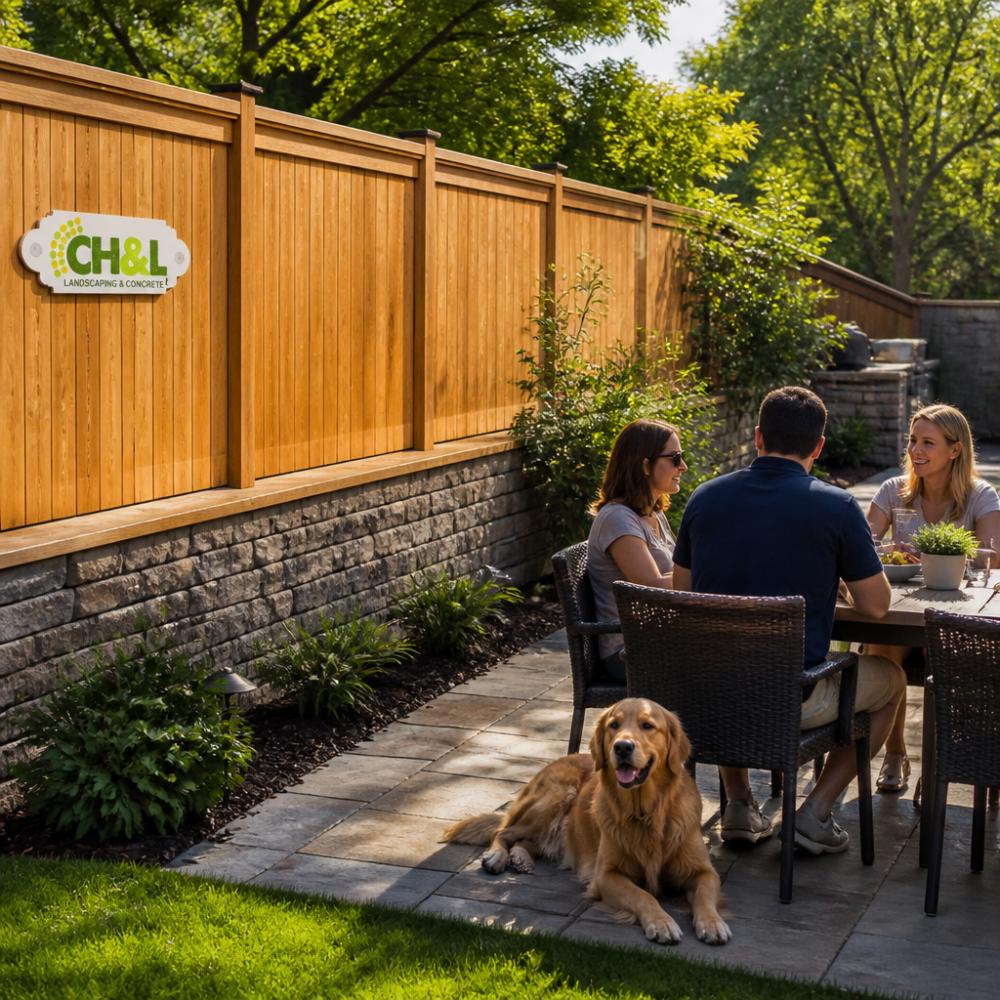
Cedar is the most popular material for residential privacy fencing. It's naturally resistant to rot and insects, takes stain and paint well, and produces a warm, organic aesthetic that complements almost any landscape design. A solid cedar board-on-board fence at 6 feet provides near-complete sightline blocking at ground level.
Masonry walls, poured concrete, stacked stone, or CMU block with stucco finish, represent the luxury end of hardscape privacy. They offer superior sound dampening, extreme longevity, and a finished look that integrates seamlessly with high-end outdoor living spaces. A masonry wall also serves as a structural anchor for climbing plants, lighting fixtures, and built-in water features. The real difference between cedar and masonry comes down to permanence and intent: cedar is a fence, masonry is architecture.
Privacy Screens, Panels, and Outdoor Curtains
For spaces where a full fence isn't feasible, or where HOA rules limit your options, privacy screens and panels offer targeted screening without major construction. Powder-coated steel panels, slatted aluminum screens, and composite wood panels can be freestanding or attached to an existing structure.
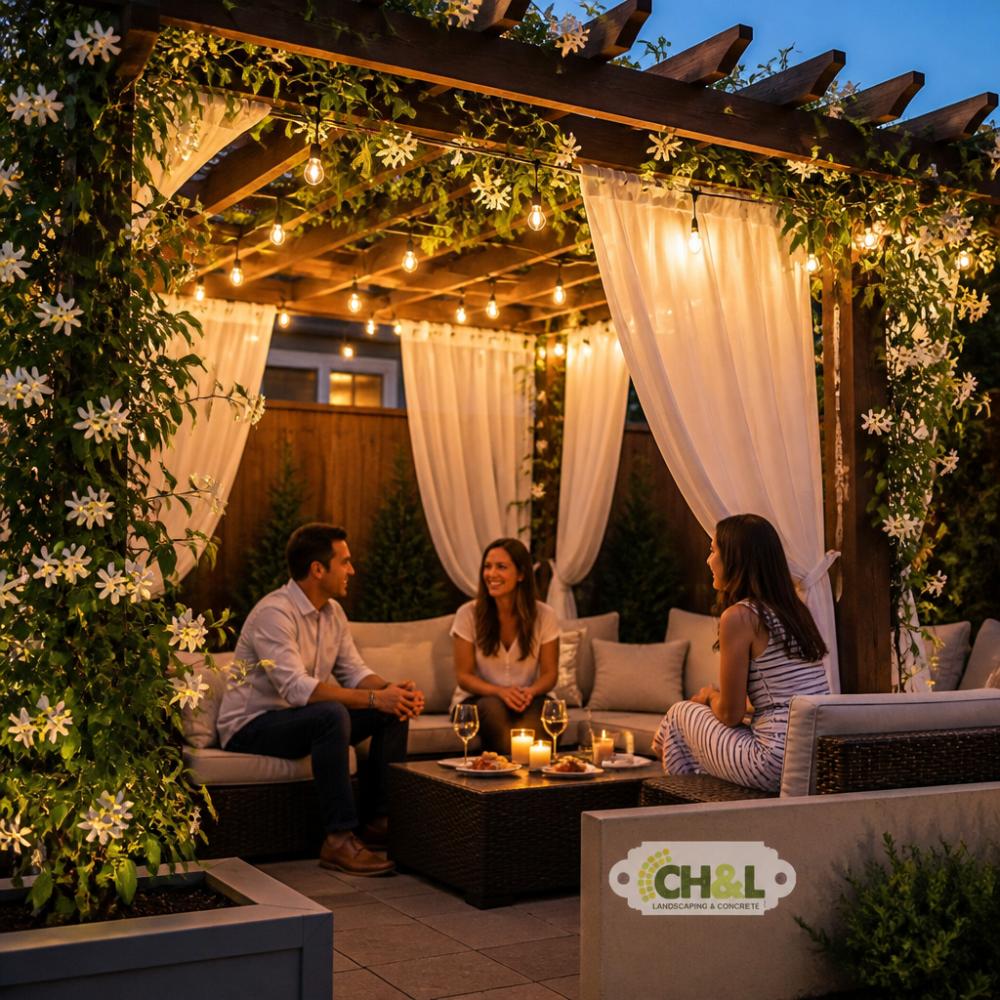
Outdoor curtains work particularly well on pergolas and covered patios. They provide adjustable privacy, filter afternoon sun, and soften the hardscape aesthetic. For maximum durability, look for solution-dyed acrylic fabrics rated for UV and moisture exposure.
Custom Shade Structures for Privacy and Outdoor Living
A shade structure does double duty: it creates overhead enclosure that blocks sightlines from elevated positions while simultaneously extending your usable outdoor living space. This is where backyard privacy and luxury landscaping intersect most directly.
Pergolas and Gazebos
A pergola is an open-roof structure supported by posts, typically built from cedar, redwood, aluminum, or steel. It defines space without fully enclosing it, making it ideal for dining areas and lounges. Add a retractable canopy or climbing plants along the rafters and you get meaningful overhead screening.
A gazebo provides full overhead coverage and often includes built-in railings or screens, creating a more enclosed backyard retreat. Gazebos work especially well in corners of larger lots where you want a destination point that feels genuinely private.
CH&L Landscaping & Concrete specializes in custom shade structures designed and built as part of a complete outdoor living space. Our custom design process ensures the structure's footprint, height, and material palette integrate with your existing hardscape and landscaping before a single post goes in the ground.
Vertical Gardens and Living Walls
A vertical garden is a planted wall system that uses modular panels, pocket planters, or trellis-trained vines to create a living surface. As a privacy solution, it combines screening with foliage, sound dampening, and aesthetic appeal in a single installation.
Living walls work best on south- or east-facing exposures where they receive adequate light. For a trellis-based approach, fast-growing vines like Carolina jessamine, star jasmine, or climbing hydrangea can cover a 6-foot trellis panel within one to two growing seasons.
Low-Maintenance Privacy Landscaping That Actually Works
Most homeowners want privacy without adding a second job to their schedule. Low-maintenance privacy landscaping is achievable with the right plants for your specific climate and proper installation from the start.
Evergreen Trees, Hedges, and Climate-Specific Plant Selection
Evergreen trees and hedges are the backbone of any long-term privacy landscaping plan. Unlike deciduous options, they provide year-round screening without dropping foliage in winter.
The most common mistake is planting species that aren't suited to your local climate. According to the USDA Plant Hardiness Zone Map, plant selection should be matched to your specific hardiness zone to ensure long-term survival and growth rate. For the Bay Area, this typically means USDA zones 9b to 10a, which supports many fast-growing evergreens.
Reliable choices for a privacy hedgerow include Podocarpus gracilior (Fern Pine), Pittosporum tenuifolium, clumping bamboo (Fargesia spp.), and Italian Cypress. Spacing matters as much as species selection. Plant too far apart and you wait years for a continuous screen. A general rule: space plants at 50 to 75 percent of their mature width for a solid hedgerow.
Potted Plants and Planter Boxes as Flexible Screening
Planter boxes and large containers offer a privacy solution that zoning laws can't touch. Because they're not permanent structures, they typically fall outside fence height regulations and HOA approval requirements.
A row of large planter boxes along a deck edge, planted with tall ornamental grasses, bamboo, or columnar shrubs, creates an effective visual barrier that can be repositioned seasonally. Built-in planter boxes integrated into a deck or patio design add structural weight and permanence without triggering permit requirements.
Strategic Landscaping to Increase Backyard Privacy
Strategic landscaping means treating your entire yard as a layered system rather than addressing one exposure point at a time. The most effective approach combines hardscape elements with planting to create depth, redundancy, and year-round coverage.
The layered approach works like this: a fence or wall creates the primary enclosure and defines your property line. A secondary layer of evergreen shrubs or ornamental grasses softens the hardscape and fills gaps at mid-height. A tertiary layer of taller trees or a vertical garden addresses elevated sightlines from neighboring second stories.
Additional strategic moves include grade changes (a raised planting bed adds 12 to 18 inches of effective height without violating restrictions), strategic lighting placement that draws the eye inward, and sound masking with water features that reinforce the sense of a secluded oasis.
Common Mistakes to Avoid When Adding Backyard Privacy
The planning phase is where most backyard privacy projects succeed or fail. Common errors include skipping the sightline analysis, choosing the wrong plant species for your climate, ignoring the property line, underestimating maintenance requirements, and not accounting for HOA approval timelines.
As noted in the American Society of Landscape Architects' residential design resources, integrating privacy planning into the broader landscape design process, rather than treating it as a retrofit, consistently produces better outcomes in both aesthetics and function.
Transforming a backyard into a genuinely private outdoor living space requires a coordinated plan that addresses sightlines, regulations, materials, and maintenance before the first shovel hits the ground. CH&L Landscaping & Concrete brings over 15 years of experience to exactly this kind of project, with a proven design and build process that keeps your project on time and on budget. From custom pergolas and masonry walls to climate-specific privacy landscaping, our licensed and insured team handles every element of your outdoor transformation. Get a Free Estimate from CH&L Landscaping & Concrete and start building the backyard retreat you've been planning.
Frequently Asked Questions
Q: What is the most effective way to add privacy to a backyard?
A: The most effective backyard privacy solutions combine hardscape and softscape elements. A solid fence or masonry wall blocks sightlines immediately, while evergreen trees and hedges add a natural buffer zone over time. For full enclosure, pairing a privacy fence with a pergola or shade structure on the open sides creates a secluded oasis. The right combination depends on your exposure points, local fence height regulations, and how much maintenance you want to take on.
Q: Are there legal restrictions on fence heights for backyard privacy?
A: Yes. Most municipalities cap backyard fences at 6 feet, while front yard fences are often limited to 3-4 feet. HOA rules can be even more restrictive, sometimes governing materials and colors as well as height. Always check with your local planning or building department and your HOA before installing any fence or wall. Violating zoning laws can result in costly removal orders, so verifying the rules first protects your investment.
Q: What are the best plants for creating a natural privacy screen?
A: Evergreen trees and shrubs are the top choice for year-round screening because they retain their foliage through winter. Arborvitae, Leyland cypress, and clumping bamboo are fast-growing options that form a dense hedgerow. For warmer climates, native screening plants often require less water and maintenance. Choose species suited to your region's climate and soil to reduce upkeep. A professional landscape designer can match plant selection to your specific sightline gaps and sun exposure.
Q: Can shade structures help improve backyard privacy?
A: Pergolas, gazebos, and covered pavilions significantly improve backyard privacy by creating a defined enclosure overhead and on the sides. Adding outdoor curtains, a trellis with climbing plants, or a vertical garden to a pergola turns an open structure into a true backyard retreat. Custom shade structures also add aesthetic appeal and increase usable outdoor living space year-round. They work especially well when a solid fence alone cannot address overhead sightlines from neighboring second-story windows or elevated decks.
This article was written using GrandRanker
Ready to start your project?
CH&L Landscaping & Concrete serves Concord, Martinez, and the greater Bay Area. Get a free, no-obligation estimate today.
Get a Free Estimate