How to Manage Landscaping Budget: A Step-by-Step Guide
Table of Contents
- Assess Your Project Needs and Goals
- Understanding the Cost of Backyard Renovation in 2026
- Create a Landscaping Project Cost Breakdown
- How to Prioritize Landscaping Expenses
- Phase Your Project to Control Cash Flow
- Tips for Avoiding Landscaping Cost Overruns
- How to Manage Landscaping Budget Throughout the Project
- Frequently Asked Questions
Last Updated: September 27, 2026
Assess Your Project Needs and Goals
Before you spend a dollar on landscaping, you need to understand what you're actually trying to accomplish, the foundation of how to manage landscaping budget effectively. Homeowners who skip this step often end up making expensive changes mid-project or discovering their vision doesn't match their budget.
Start by asking yourself these questions: What problem are you solving? Are you creating an entertainment space, improving privacy, adding a water feature, or simply enhancing curb appeal? Do you want year-round usability, or is this seasonal? What's your timeline, are you working toward a specific date, or is flexibility built in?
Write down your priorities. Not everything matters equally. One family might prioritize low-maintenance landscaping because they travel frequently. Another wants maximum outdoor entertaining space. A third is focused on property value. Your priorities shape every decision that follows, from material selection to project phasing.
Also be honest about your involvement level. How hands-on do you want to be during design and construction? Some homeowners prefer to hand off everything. Others want detailed input at each stage. This affects communication needs and timeline expectations.
Understanding the Cost of Backyard Renovation in 2026
Landscaping projects vary wildly in cost depending on scope, materials, and labor intensity. A small patio refresh might run a few thousand dollars. A comprehensive hardscape renovation with custom shade structures and extensive softscape can reach six figures. The key is understanding what drives costs so you can make informed trade-offs.
Material expenses typically represent 40-50% of project costs for quality work. Hardscape materials, pavers, stone, concrete, wood, carry significant upfront expense but deliver durability and low maintenance. Softscape costs depend on plant selection, size at installation, and complexity of irrigation systems. Water-efficient landscaping may cost more initially but saves money long-term through reduced maintenance and watering.
Labor costs depend on project complexity and your location. Skilled trades like masonry, deck building, and custom shade structure installation command premium rates because they require expertise. A straightforward planting project costs less per hour than designing and installing a multi-level hardscape system.
Equipment and machinery costs add up quickly for larger projects. Excavation, grading, and material transport require specialized equipment. If your contractor must rent equipment for your specific project, those costs pass through to you. Some contractors absorb equipment costs into their overhead; others bill separately.
Accounting for Material Cost Inflation in Multi-Year Projects
If your project spans multiple years or phases, material costs will likely increase. Landscaping material prices can fluctuate, though this varies by material type and market conditions. Stone and hardscape materials tend to be more volatile than softscape due to quarrying and transportation costs.
When budgeting a phased project, build an inflation adjustment into your contingency reserve. For long-term projects, request that your contractor provide material cost estimates with a validity date. You may also consider negotiating a price-lock clause for materials ordered and delivered in earlier phases, or establishing a cost-adjustment formula tied to published material price indices.
Alternatively, front-load your project by completing high-cost hardscape phases first, when material prices are locked in. Defer softscape and finishing elements to later phases, when you can adjust plant selections based on current availability and pricing.
Hidden and Indirect Costs
Don't overlook indirect costs: permits, inspections, site preparation, debris removal, and contingency reserves. A realistic budget includes 10-15% contingency for unexpected conditions. Discovering poor drainage, unstable soil, or underground utilities during excavation happens frequently.
Permit costs vary by jurisdiction and project scope. A simple planting project may require no permits. A deck, patio, or shade structure typically requires building permits and inspections, which add to the overall cost depending on local fees and complexity. Some municipalities charge based on project value; others charge flat fees. Ask your contractor what permits are required and who bears the cost, typically the homeowner, though contractors often handle the application process.
Site preparation and debris removal are often underestimated. If your yard has existing landscaping, trees, or hardscape to remove, disposal costs add up. Hauling soil, old pavers, or vegetation can add to the cost depending on volume. Clarify whether your estimate includes removal of existing features or if that's a separate line item.
Create a Landscaping Project Cost Breakdown
Breaking your project into specific cost categories forces you to think through details and prevents surprises. A solid cost breakdown is your first defense against budget overruns.
Hardscape vs. Softscape Expenses
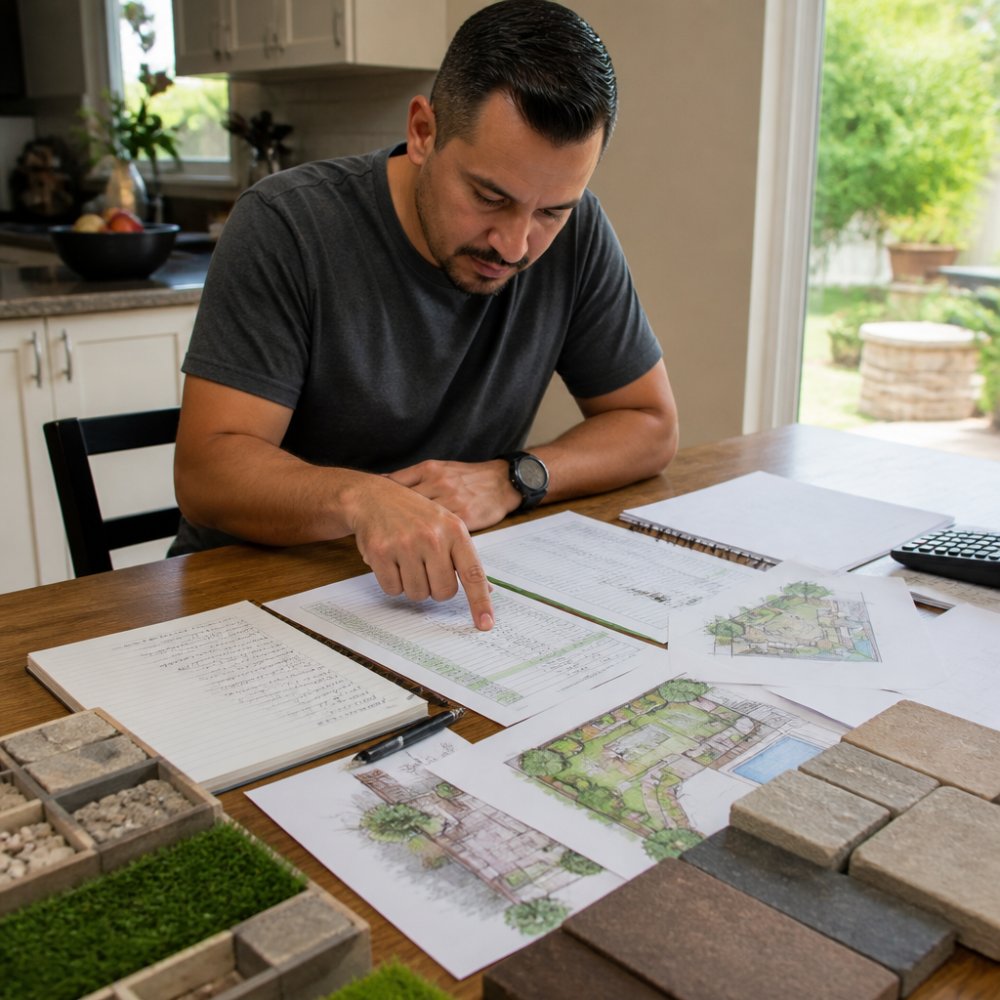
Hardscape, patios, decks, pathways, retaining walls, shade structures, typically costs more per square foot than softscape but lasts longer. Pavers, natural stone, and quality wood command premium prices. Installation requires skilled labor. But a well-built patio functions for 20+ years with minimal maintenance.
Softscape, plants, trees, shrubs, lawn, irrigation, costs less upfront but requires ongoing maintenance. Perennials and established trees add immediate visual impact. Compost and soil amendments improve growing conditions. Irrigation systems ensure consistent watering without daily effort, supporting low-maintenance landscaping goals.
The trade-off is simple: invest more in hardscape for durability and lower maintenance, or invest in softscape for immediate greenery and flexibility to change plantings later. Most balanced projects combine both, with hardscape forming the structural foundation and softscape adding color and life.
Labor, Materials, and Equipment Costs
Separate these three categories in your budget. Materials are tangible, you can see pavers, wood, plants, stone. Labor is the skilled work: design, installation, problem-solving. Equipment is machinery: excavators, compactors, delivery trucks.
For each major component of your project, estimate material cost, labor hours, and equipment needs. A professional contractor provides itemized estimates. This breakdown helps you understand where money goes and where you might find savings without sacrificing quality.
How to Prioritize Landscaping Expenses
You can't do everything at once. Prioritization lets you phase work strategically, spreading costs across time while maintaining momentum and functionality.
Start with structural needs. If drainage is poor, fix it first, water damage to your home is far more expensive than preventive grading and drainage systems. If soil is depleted or contaminated, amend it before planting. These invisible foundations prevent costly failures later.
Next, prioritize high-impact visible elements. An attractive patio or deck transforms how you use your outdoor space immediately. A well-designed shade structure extends usable hours into hot afternoons. These projects deliver immediate value and enjoyment.
Then add softscape and finishing touches. Plants establish over time, so planting early makes sense. But if budget is tight, you can plant gradually as funds allow. Perennials and shrubs fill in year after year.
Finally, consider optional enhancements: water features, outdoor kitchens, lighting, built-in seating. These are valuable but not essential. They're also easiest to defer or scale back if budget tightens.
Phase Your Project to Control Cash Flow
Phasing spreads costs across multiple years or seasons, making large projects manageable. This approach also lets you adjust plans based on how you actually use the space after the first phase completes.
A typical phasing strategy might look like this: Phase 1 builds the foundation, grading, drainage, hardscape structure, basic irrigation. Phase 2 adds planting, mulch, and compost amendments. Phase 3 introduces shade structures, outdoor furniture, or additional features.
Phasing also aligns with seasonal work windows. Spring and fall are ideal for most landscaping because temperatures favor plant establishment and labor availability is good. Winter is suitable for hardscape work in many regions. By phasing, you work within optimal seasons rather than forcing work during poor conditions.
One advantage of phasing: you learn from each phase before committing to the next.
Tips for Avoiding Landscaping Cost Overruns
Cost overruns happen when scope creeps, unexpected conditions emerge, or estimates prove inaccurate. Here's how to protect your budget.
How to Manage Landscaping Budget Throughout the Project
Once work begins, active budget management keeps costs aligned with your plan.
Using Software and Tools for Real-Time Budget Tracking
Manual spreadsheets work, but project management software designed for home renovation and landscaping can provide real-time visibility and reduce errors. General accounting software can also allow you to log expenses as invoices arrive, compare actual costs against your budget line-by-line, and flag overruns immediately.
Tax Implications and Deductible Expenses
If you own a rental property or operate a landscaping business, many project expenses may be tax-deductible. Even for primary residences, certain improvements may qualify for energy-efficient tax credits or be deductible in specific circumstances.
Frequently Asked Questions
How do I ensure my landscaping project stays on budget?
Start with a detailed cost breakdown that accounts for hardscape, softscape, labor, and equipment. Get a written contract with itemized costs from your contractor. Set aside a contingency fund (typically 10-15% of your total budget) for unexpected expenses. Track all expenses throughout the project and request regular budget updates from your contractor. Clear communication about scope changes before work begins prevents costly surprises.
What's the difference between hardscape and softscape costs in a budget?
Hardscape includes permanent structures like patios, decks, walls, and pathways, which typically require higher upfront material and labor costs but need less frequent maintenance. Softscape covers plants, trees, mulch, and lawn areas, which generally cost less initially but require ongoing maintenance like watering, pruning, and seasonal care. Understanding this distinction helps you allocate budget based on your priorities and long-term maintenance capacity.
How do I prioritize landscaping expenses when working with a fixed budget?
Identify which elements add the most value and function to your outdoor space first. Typically, prioritize structural improvements (hardscape, privacy features) before decorative elements. Consider phasing the project over multiple seasons to spread costs. Focus on high-impact, low-maintenance solutions that match your lifestyle. Discuss trade-offs with your contractor to understand which cuts affect long-term durability versus aesthetics.
What hidden costs should I consider in a backyard renovation?
Beyond visible materials and labor, budget for site preparation, grading, drainage solutions, permits, and inspections. Account for seasonal maintenance equipment if you're adding new plantings or irrigation. Consider soil remediation if your yard has poor drainage or compacted soil. Equipment rental or removal fees for existing structures can add up quickly. Weather delays may extend timelines and affect labor costs. Tax implications of capital improvements should also be discussed with a tax professional.
Ready to start your project?
CH&L Landscaping & Concrete serves Concord, Martinez, and the greater Bay Area. Get a free, no-obligation estimate today.
Get a Free Estimate