11 Low Maintenance Landscaping Ideas for 2026
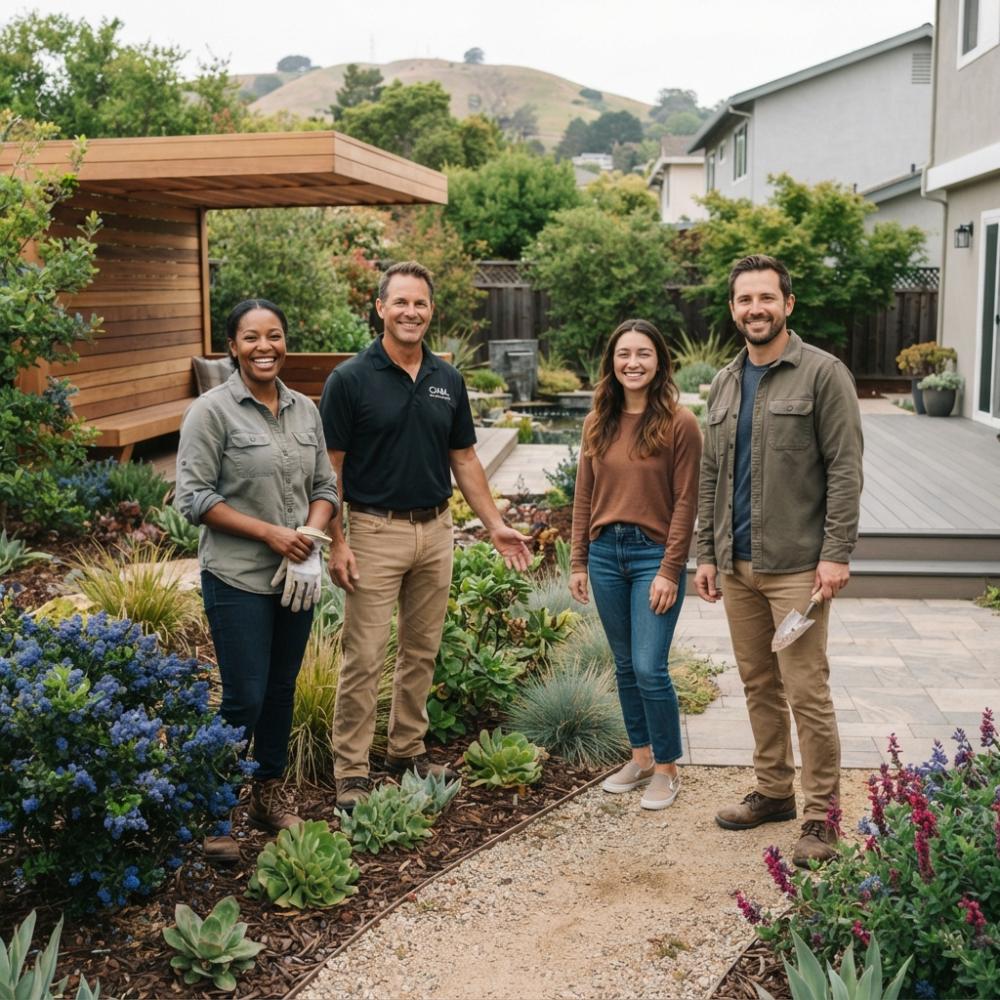
Table of Contents
- Why Low Maintenance Landscaping Is the Smart Choice for 2026
- 1. Replace Turf with Climate-Adapted Groundcovers
- Quick Comparison: Lawn Alternatives and Their Upkeep
- 2. Plant Perennials and Native Species for Year-Round Color
- 3. Hardscape vs Softscape Maintenance: Why Balance Matters
- 4. Sustainable Backyard Remodeling Ideas That Pay Off
- 5. Smart Irrigation and Mulch: The Low-Maintenance Duo
- Drought-Tolerant Landscaping Design: A Step-by-Step Plan
- Frequently Asked Questions
Last Updated: September 6, 2026
The days of the water-hungry, weekend-consuming lawn are fading fast. Low maintenance landscaping ideas 2026 are less about giving up on your yard and more about designing it so you can actually enjoy it. At CH&L Landscaping & Concrete, we've spent over 15 years building Bay Area backyards that prioritize year-round usability, and the single biggest shift we see is a move away from turf and toward intentional, resilient design.
Why Low Maintenance Landscaping Is the Smart Choice for 2026
Low maintenance landscaping is the practice of designing outdoor spaces to require minimal water, pruning, mowing, and replanting while maintaining strong visual appeal. The payoff is more than reclaimed weekends; it is a direct investment in your property's long-term health and value.
The shift is also practical. With ongoing pressure on water resources across the region, climate-appropriate planting is becoming the standard rather than the exception. Municipal guidance increasingly encourages homeowners to reduce turf areas and adopt drought-tolerant species, a trend documented by the Environmental Protection Agency's WaterSense program. Choosing a design that works with your local climate means less intervention, fewer inputs, and a landscape that gets better with age.
1. Replace Turf with Climate-Adapted Groundcovers
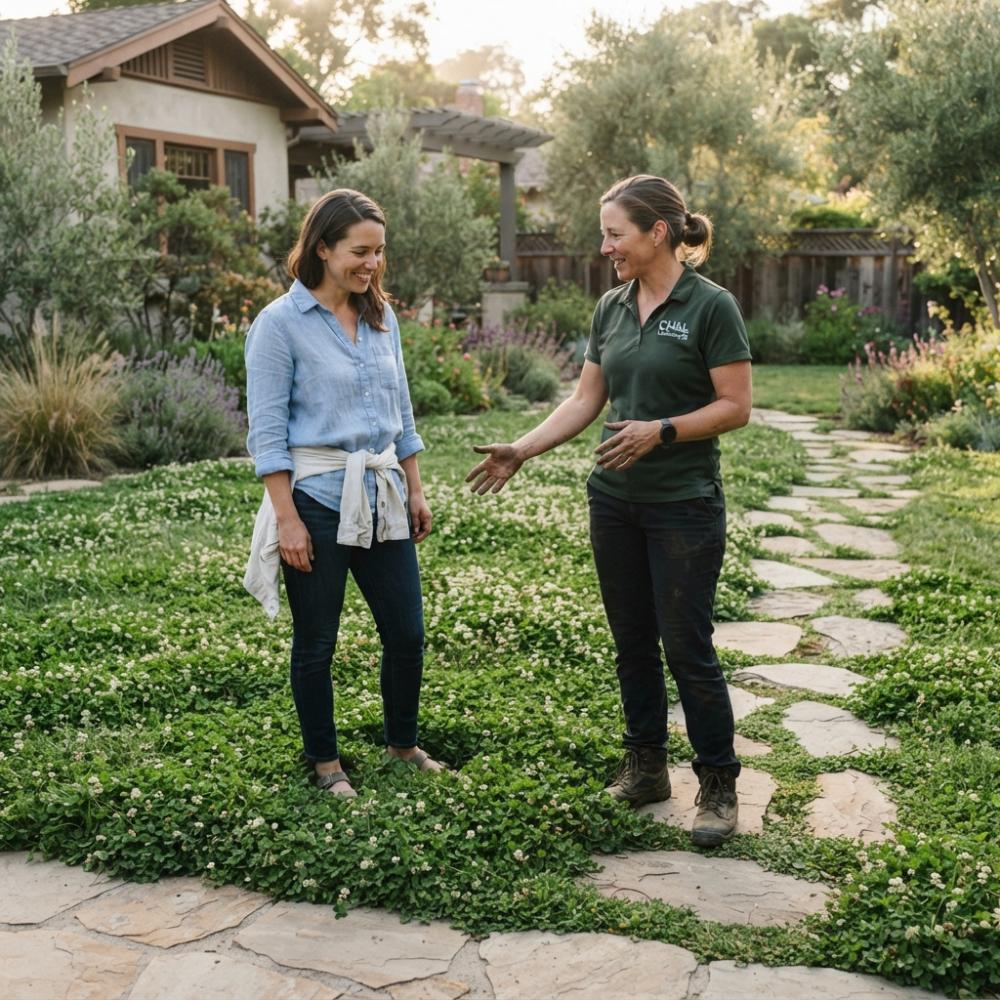
The quickest win for a low maintenance yard is removing traditional grass. Turf demands more water, mowing, and fertilizer than almost any other planting choice. Climate-adapted groundcovers like clover or creeping thyme provide a green, walkable surface that stays resilient through dry spells and requires a fraction of the upkeep.
Clover naturally fixes nitrogen in the soil, so you can skip fertilizer entirely (extension.umn.edu). It stays green when conventional grass goes dormant and only needs occasional mowing. For a more ornamental look, low-growing sedum or creeping thyme offers texture and seasonal color while suppressing weeds.
Quick Comparison: Lawn Alternatives and Their Upkeep
| Groundcover | Water Needs | Mowing | Best Use Case | Establishment Time |
|---|---|---|---|---|
| Clover Lawn | Low | Occasional | Family yards, pollinator support | 2-4 weeks |
| Creeping Thyme | Low | None | Stepping stone gaps, borders | 4-6 weeks |
| Sedum | Very Low | None | Slopes, hot dry areas | 3-5 weeks |
| Artificial Turf | None | None | High-traffic play areas | Immediate |
Clover is the closest like-for-like swap for grass, while sedum is the most drought-hardy for challenging spots. Artificial turf eliminates watering but lacks the biodiversity benefits of living groundcovers, so it suits specific zones like pet runs rather than whole yards.
2. Plant Perennials and Native Species for Year-Round Color
Annuals demand replanting every season, the opposite of low maintenance. Perennials and native species are the backbone of a self-sustaining garden because they return year after year, deepening their root systems and becoming more drought-tolerant as they mature.
Multi-season performers like Low Scape Aronia deliver white spring flowers, summer berries, and vivid red fall foliage from a single planting. Compact evergreens such as Touch of Gold Holly hold their shape without pruning, and reblooming varieties like the Autumn Royalty Encore Azalea stretch the flower show across seasons. Native species, adapted to local rainfall and soil, reduce the need for supplemental irrigation and resist local pests.
A common mistake is choosing plants for a single season of bloom, leaving the yard bare the rest of the year. Instead, layer evergreens for structure, perennials for seasonal interest, and groundcovers to knit the beds together.
3. Hardscape vs Softscape Maintenance: Why Balance Matters
The hardscape vs softscape decision is a trade-off between upfront investment and long-term labor. Softscape, plants, soil, and mulch, is cheaper to install but carries a perpetual tax of watering, weeding, and pruning. Hardscape, stone, pavers, and concrete, demands a higher initial budget but nearly eliminates daily chores. For a luxury remodel, the goal is to engineer a ratio that fits your lifestyle and property.
A common pattern among landscape architects is to allocate 40 to 50 percent of the main living zone to hardscape, the threshold where paved surfaces meaningfully reduce the planted area needing attention. On a typical 1,000-square-foot backyard, that means roughly 400 to 500 square feet of patio, pathways, and structural elements. The remaining area, consolidated into large, mulched planting beds, becomes far more efficient to maintain than small planters.
The material choice within hardscape is where real maintenance differences emerge. Precast concrete pavers are the workhorse of the low-maintenance yard: their interlocking design minimizes weed growth between joints, and unlike wood decks, they never require sanding, staining, or sealing. A high-quality paver installation, properly compacted with polymeric sand, can last for decades with no more than an occasional sweep or rinse. Natural stone offers a more bespoke aesthetic but requires more joint maintenance, while poured concrete is the most seamless and easiest to clean, though it offers less design flexibility.
Consider the long-term ownership cost of a wood deck versus a paver patio. A wood deck requires power washing, staining, and sealing every one to two years, with materials costing several hundred dollars per job and labor taking a full weekend. A paver patio requires none of that, only an occasional sweep and, every few years, a top-up of polymeric sand in the joints, a task taking under an hour.
The strategic principle is to concentrate softscape into fewer, larger, and deeper beds. A 10-foot-deep bed filled with groundcovers, shrubs, and perennials requires less edge-trimming than a 2-foot-wide strip along a fence. By consolidating planting areas and expanding paved surfaces, you create a more usable, resort-like environment that functions as an extension of the home.
4. Sustainable Backyard Remodeling Ideas That Pay Off
Sustainable backyard remodeling ideas reduce long-term inputs while increasing property value and usability. The most effective projects combine water-smart planting with durable materials that will not need replacing in a few years.
One of the highest-impact moves is installing a smart irrigation controller. These systems adjust watering schedules based on local weather data and soil moisture, eliminating the guesswork of a manual timer. Pair that with a generous layer of mulch across planted beds, and you have a system that keeps moisture in and weeds out.
Solar-powered landscape lighting is another upgrade with zero ongoing cost. Modern kits use automatic dusk-to-dawn sensors and require no wiring, so they can be repositioned as your landscape evolves. Strategically placed lights extend the hours you can use an outdoor space and highlight specimen trees or architectural features.
5. Smart Irrigation and Mulch: The Low-Maintenance Duo
The combination of smart irrigation and mulch is the most reliable way to cut water use and weed pressure at once. A 7 to 10 centimeter layer of organic mulch suppresses weed germination, regulates soil temperature, and slowly breaks down to improve soil health, meaning fewer weeds to pull and less water lost to evaporation.
Smart irrigation takes the guesswork out of watering. Soil moisture sensors and weather-based controllers ensure plants get water only when they actually need it, which is especially important during establishment periods. Most systems can be managed from a phone, and they automatically adjust for seasonal changes, so you are not babysitting a hose all summer. The University of California's Division of Agriculture and Natural Resources publishes region-specific guidance on irrigation scheduling that helps homeowners fine-tune these systems for local conditions.
The key is applying mulch correctly. Too thin and it will not suppress weeds; too thick and it can suffocate roots. A consistent layer spread evenly across the bed, kept a few centimeters away from plant stems and tree trunks, delivers the best results.
Drought-Tolerant Landscaping Design: A Step-by-Step Plan
Drought-tolerant landscaping design is a practical process of reducing water demand while preserving visual richness. The most common mistake is treating it as a plant swap, replacing a lawn with a few succulents. A true low-water landscape is a system where soil, irrigation, and plant selection work together.
Step 1: Assess Sun Exposure and Drainage
Before any plant goes in the ground, map your yard's microclimates. Track which areas receive full sun (6+ hours), partial shade (3-6 hours), and full shade (less than 3 hours). Also, test your drainage. Dig a 12-inch hole, fill it with water, and time how long it takes to drain. If it takes longer than 24 hours, you have poor drainage and will need to amend the soil or select plants that tolerate wet feet.
Step 2: The Lawn Removal Process
Removing turf is the most physically demanding step. There are two primary methods: physical removal and sheet mulching.
Physical Removal (Sod Cutting): This is the fastest method. Rent a powered sod cutter, set the blade depth to about 1-2 inches to slice just below the grass roots, and roll up the strips for disposal. This leaves a clean, bare soil surface ready for planting or hardscape installation, though it is heavy labor and can disturb soil structure.
Sheet Mulching (The No-Dig Method): This is the preferred method for those who want to avoid heavy labor and improve soil health simultaneously. The process is simple but requires patience:
- Mow low: Cut the existing grass as short as possible.
- Water deeply: Soak the area to activate soil biology.
- Apply cardboard: Lay down overlapping sheets of plain, uncoated cardboard (remove all tape and labels). Overlap edges by at least 6 inches to prevent grass from finding a gap.
- Wet the cardboard: Thoroughly soak the cardboard so it conforms to the ground and doesn't blow away.
- Add compost: Spread a 3-4 inch layer of compost or topsoil over the cardboard. This is your new planting medium.
- Mulch: Top with a 2-3 inch layer of wood chips or bark.
This 'lasagna' method smothers the grass, which decomposes in place, adding organic matter. The cardboard breaks down over several months, and the compost layer provides a rich bed for new plantings. You can plant directly into the compost layer immediately, or wait a season for the grass to fully die off.
Step 3: Define the Hardscape Layout
With the lawn gone, you have a blank canvas. Mark out patios, pathways, and seating zones using spray paint or garden hoses. Establishing hardscape first is critical because it dictates the exact shape and size of your planting beds and prevents you from digging up a finished garden to install a walkway.
Step 4: Select Climate-Appropriate Plants
This is where regional specificity matters most. A plant that thrives in the arid Southwest will rot in the humid Southeast. Instead of generic 'drought-tolerant' lists, research plants native to your specific ecoregion. For example, a Pacific Northwest homeowner might select Oregon Grape (Mahonia aquifolium) and Western Sword Fern, while a Southwest homeowner might choose Desert Marigold (Baileya multiradiata) and Red Yucca (Hesperaloe parviflora). Your local cooperative extension service or native plant nursery is the best resource for a list proven to thrive in your county.
Step 5: Install an Efficient Irrigation System
Drip irrigation is the gold standard for low-water landscapes. Unlike sprinklers, drip lines deliver water directly to the root zone at a slow, steady rate, minimizing runoff and evaporation. For a luxury finish, consider a subsurface drip system buried beneath the mulch, hidden entirely from view. Pair this with a 'smart' controller that uses local weather data and soil moisture sensors to adjust watering automatically.
Step 6: Apply a Generous Layer of Mulch
A 3-inch layer of organic mulch (like arborist wood chips or shredded bark) suppresses weed germination, regulates soil temperature, and slowly breaks down to improve soil health. The result is fewer weeds to pull and less water lost to evaporation. Keep the mulch a few inches away from plant stems and tree trunks to prevent rot.
Step 7: Plan for Seasonal Maintenance
Even a drought-tolerant landscape needs a minimal seasonal check. In late winter, prune dormant grasses and perennials. In early spring, replenish mulch in thin areas and check the irrigation system for clogged emitters. In fall, adjust the irrigation controller for cooler weather and reduced rainfall. This 15-minute quarterly checklist is all that's needed.
This process works whether you are tackling a small front yard or a full backyard remodel. Taking it step by step prevents costly mistakes and ensures the finished design is genuinely self-sustaining. A drought-tolerant yard is not barren; it is a carefully composed mix of textures, colors, and materials that needs far less from you.
Frequently Asked Questions
What are the major landscaping trends for 2026?
Major trends for 2026 center on sustainability and reducing upkeep. Homeowners are replacing traditional turf with clover or creeping thyme, planting more native species and perennials for year-round color, and adding smart irrigation systems that cut water waste. Hardscape elements like paver patios and stone pathways are also popular because they create usable outdoor living space without the weekly maintenance of a lawn.
What is the easiest landscaping to maintain?
The easiest landscaping to maintain combines a few key elements: groundcovers like clover that need infrequent mowing, native shrubs and perennials that thrive without extra water, and a layer of mulch to suppress weeds. Adding hardscape features such as a paver patio or stone pathway reduces the total planted area, which means less time spent on watering, pruning, and weeding throughout the season.
What is the rule of 3 in landscaping?
The rule of 3 is a design guideline that suggests grouping plants in odd numbers, especially threes, to create a more natural and visually appealing arrangement. In practice, planting three of the same shrub or perennial together looks fuller and more intentional than planting singles. This approach also simplifies maintenance because you can treat the group the same way, rather than managing many different individual plants with different needs.
What are the best drought-tolerant plants for low-maintenance yards?
Several plants deliver strong visual impact with minimal water once established. Low Scape Aronia offers white flowers, berries, and red fall foliage. Autumn Royalty Encore Azalea blooms multiple times per year and tolerates more sun than traditional varieties. Touch of Gold Holly adds year-round color with a compact shape that needs little pruning. A professional landscape consultation can help you select plants matched to your specific microclimate.
Ready to start your project?
CH&L Landscaping & Concrete serves Concord, Martinez, and the greater Bay Area. Get a free, no-obligation estimate today.
Get a Free Estimate