Modern Backyard Functional Design Ideas for 2026
Table of Contents
- Backyard Zoning for Functionality: Creating Distinct Outdoor Rooms
- How to Increase Backyard Privacy with Modern Screens and Plantings
- Modern Shade Structure Ideas: Pergolas, Pavilions, and Retractable Systems
- Low-Maintenance Backyard Landscaping Ideas for Busy Homeowners
- Smart Backyard Technology and Sustainable Design
- Conclusion: Bringing Your Modern Backyard Vision to Life
- Frequently Asked Questions
Last Updated: September 17, 2026
Backyard Zoning for Functionality: Creating Distinct Outdoor Rooms
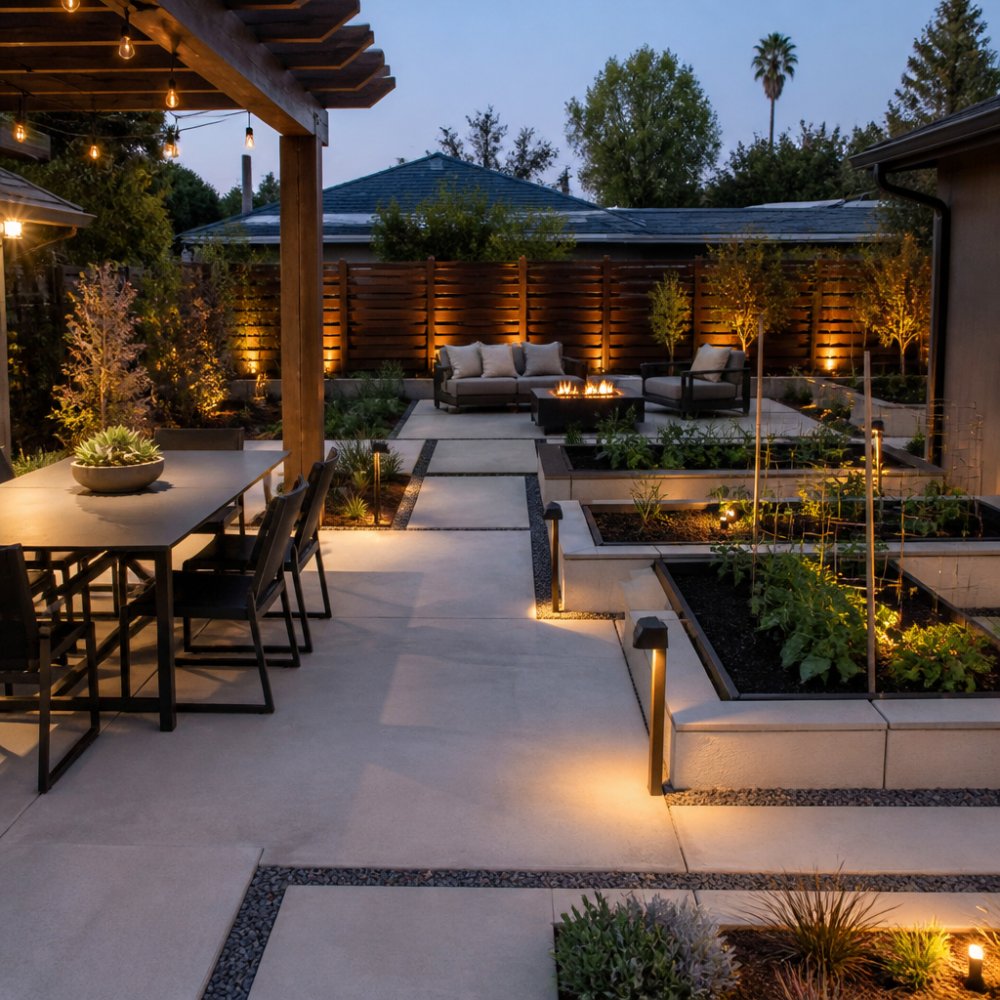
The most common mistake in modern backyard functional design ideas is treating the yard as one open space instead of several connected rooms. Divide the yard into zones first, then choose materials for each.
A clear zoning plan can turn a flat lawn into an outdoor living space the whole family actually uses. Start with three zones: eating, lounging, and growing. Each zone gets its own flooring, lighting, and furniture footprint.
Defining Zones with Hardscaping and Softscaping
Hardscaping defines the edges: pavers, concrete pads, and retaining walls set the geometry. Softscaping fills the gaps: lawn, groundcover, and planting beds soften the transition. A geometric layout with mixed materials reads as contemporary, while a single material throughout can feel flat.
How to Increase Backyard Privacy with Modern Screens and Plantings
Increasing backyard privacy starts with sightlines, not fences. Walk the perimeter at eye level and note every point where a neighbor's window or a second-story deck looks straight into your yard.
Horizontal Fencing and Architectural Privacy Screens
Horizontal slats in cedar or composite block angled sightlines better than vertical boards and match a contemporary look. Add a privacy screen near the seating zone, then layer in taller planting behind it for depth. Clumping bamboo, podocarpus, and upright hollies work well where you need height without a solid wall. Keep planting beds at least 60 centimeters wide so roots have room.
Modern Shade Structure Ideas: Pergolas, Pavilions, and Retractable Systems
Modern shade structure ideas come down to three choices: pergola, pavilion, or retractable system. The right pick depends on how you want to use the yard at 3 p.m. in July, not just how the structure looks in a photo.
A pergola offers partial shade and open framing. A pavilion gives full cover and can house an outdoor kitchen. A retractable awning or louvered roof adjusts through the day. Each has a different relationship to sun angle, wind, and maintenance.
| Structure | Shade Level | Best For | Maintenance |
|---|---|---|---|
| Pergola | Partial, slatted | Dining and lounge zones | Low |
| Pavilion | Full cover | Outdoor kitchens, year-round use | Low |
| Retractable system | Adjustable | Changing sun angles | Moderate |
| Shade sail | Partial, fixed | Budget-friendly focal points | Moderate |
Material and Span Considerations
For a modern look, the structure's material should match the hardscape. Powder-coated aluminum pergolas resist rust and need less upkeep than wood. Cedar and ipe offer warmth but require annual sealing or staining. Composite wraps over steel give the look of wood with the durability of engineered material.
Span matters more than most homeowners expect. A freestanding pergola with 6-by-6 posts can typically span 12 to 16 feet between posts before the beam size needs to increase. Beyond that, you are looking at steel reinforcement or a engineered beam. A louvered roof system usually needs a structural frame rated for local wind loads, which is why professional installation is common for that option.
Climate-Specific Shade Strategy
For climate-specific design, a louvered roof handles hot afternoons and light rain without closing the space in.
If you want a structure that works in every season, a pavilion with integrated lighting and a ceiling fan is the safer pick. If you want flexibility and a more open feel, a pergola with adjustable louvers or a retractable canopy gives you control without a fully enclosed roof.
Low-Maintenance Backyard Landscaping Ideas for Busy Homeowners
Low-maintenance backyard landscaping ideas begin with the right plant list, not less planting. Choose species that suit your climate and need little water once established, then group them by water need so one irrigation zone covers each group.
Xeriscaping and Water-Efficient Planting
Xeriscaping replaces thirsty lawn with gravel, mulch, and drought-tolerant plants. Drip irrigation on a timer cuts hand-watering to almost nothing. Add a 5 to 8 centimeter mulch layer to hold moisture and suppress weeds. A low-maintenance yard still needs seasonal pruning and irrigation checks, so plan for two or three visits a year rather than none.
For a modern look, choose plants with strong architectural form. Agave, yucca, and ornamental grasses give structure without constant trimming. In colder zones, replace them with sedum, coneflower, and feather reed grass. Native plants are the lowest-maintenance option because they evolved in your local rainfall and soil conditions. A few reliable native choices include California fuchsia and manzanita on the West Coast.
Sustainable Design That Lowers Upkeep
Sustainable choices that also lower upkeep:
- Permeable pavers that let water soak in and reduce runoff
- Recycled composite decking that resists rot and fading
- Native and drought-tolerant planting that needs less water and fewer replacements
- Solar path lights and string lights for ambient lighting without wiring
- Rain barrels or a small cistern for hand-watering planters
Permeable pavers are a functional upgrade, not just an eco gesture. They reduce standing water on patios and can eliminate the need for a separate drainage trench in many residential applications. Recycled composite decking typically lasts longer than pressure-treated wood and does not need annual staining.
Smart Irrigation and Water Management
A WiFi irrigation controller adjusts watering to local weather and cuts waste. Pair it with drip lines on separate zones for trees, shrubs, and planters. Soil moisture sensors are the next step: they override the schedule when the ground is already wet, which is where most water waste happens. Rain sensors are a simpler, lower-cost option that shuts off the system after measurable rainfall.
For a budget-conscious modern DIY approach, start with lighting and irrigation controls. Those two upgrades change how the yard feels and works for the least effort. A smart controller and a set of low-voltage LED path lights can immediately reduce both water use and evening usability.
Smart Backyard Technology and Sustainable Design
Smart backyard technology and sustainable design overlap more than most homeowners expect. A WiFi irrigation controller adjusts watering to local weather and cuts waste. Low-voltage LED lighting on a schedule extends evening use without running up the power bill.
Sustainable choices that also lower upkeep:
- Permeable pavers that let water soak in and reduce runoff
- Recycled composite decking that resists rot and fading
- Native and drought-tolerant planting that needs less water and fewer replacements
- Solar path lights and string lights for ambient lighting without wiring
- Rain barrels or a small cistern for hand-watering planters
For a budget-conscious modern DIY approach, start with lighting and irrigation controls. Those two upgrades change how the yard feels and works for the least effort.
Conclusion: Bringing Your Modern Backyard Vision to Life
The gap between a backyard you tolerate and one you use every week is usually planning, not budget. Zoning, privacy, shade, and low-water planting work together, and getting the order right saves money later.
CH&L Landscaping & Concrete handles that whole sequence, from custom design through installation of hardscapes, decks, masonry, and shade structures.
Frequently Asked Questions
How can I make my backyard more functional and modern?
Focus on zoning your backyard into distinct areas for dining, lounging, and gardening. Use hardscaping like pavers and retaining walls to define these spaces. Incorporate modern elements such as a pergola for shade, ambient lighting, and built-in seating. Choose low-maintenance materials and water-efficient plants to keep the design functional and easy to care for.
What are the best low-maintenance modern backyard landscaping ideas?
Consider xeriscaping with drought-tolerant plants, and gravel or paver patios. Install a drip irrigation system and use mulch to reduce watering. Hardscape features like concrete benches and built-in planters require minimal upkeep. These choices create a stylish, modern look while reducing time spent on yard work.
How do I increase backyard privacy without blocking light?
Use horizontal slat fencing with gaps to allow light and air through while blocking sightlines. Plant tall ornamental grasses or columnar trees for a natural screen. Add a pergola with climbing vines or a retractable privacy screen. These options maintain an open feel while providing seclusion.
What are some modern shade structure ideas for a small backyard?
For small spaces, consider a cantilever umbrella, a wall-mounted awning, or a compact pergola. Retractable shade sails are another option. These structures provide shade without taking up much room. Choose materials like powder-coated aluminum and weather-resistant fabric for durability and a modern look.
How can I incorporate water-efficient landscaping into a modern design?
Use native and drought-tolerant plants, group them by water needs, and install drip irrigation. Replace grass with gravel. Add a dry creek bed or rain garden to manage runoff. These techniques reduce water use while maintaining a clean, contemporary aesthetic.
A functional backyard starts with a clear plan, and most homeowners stall at exactly that step. CH&L Landscaping & Concrete brings 15+ years of experience, licensed and insured crews, and custom design included with every project, so your hardscape, deck, and shade structure are built to fit how you actually live outside. Get started with CH&L Landscaping & Concrete and turn your backyard into a space you use year-round.
Ready to start your project?
CH&L Landscaping & Concrete serves Concord, Martinez, and the greater Bay Area. Get a free, no-obligation estimate today.
Get a Free Estimate